Search.
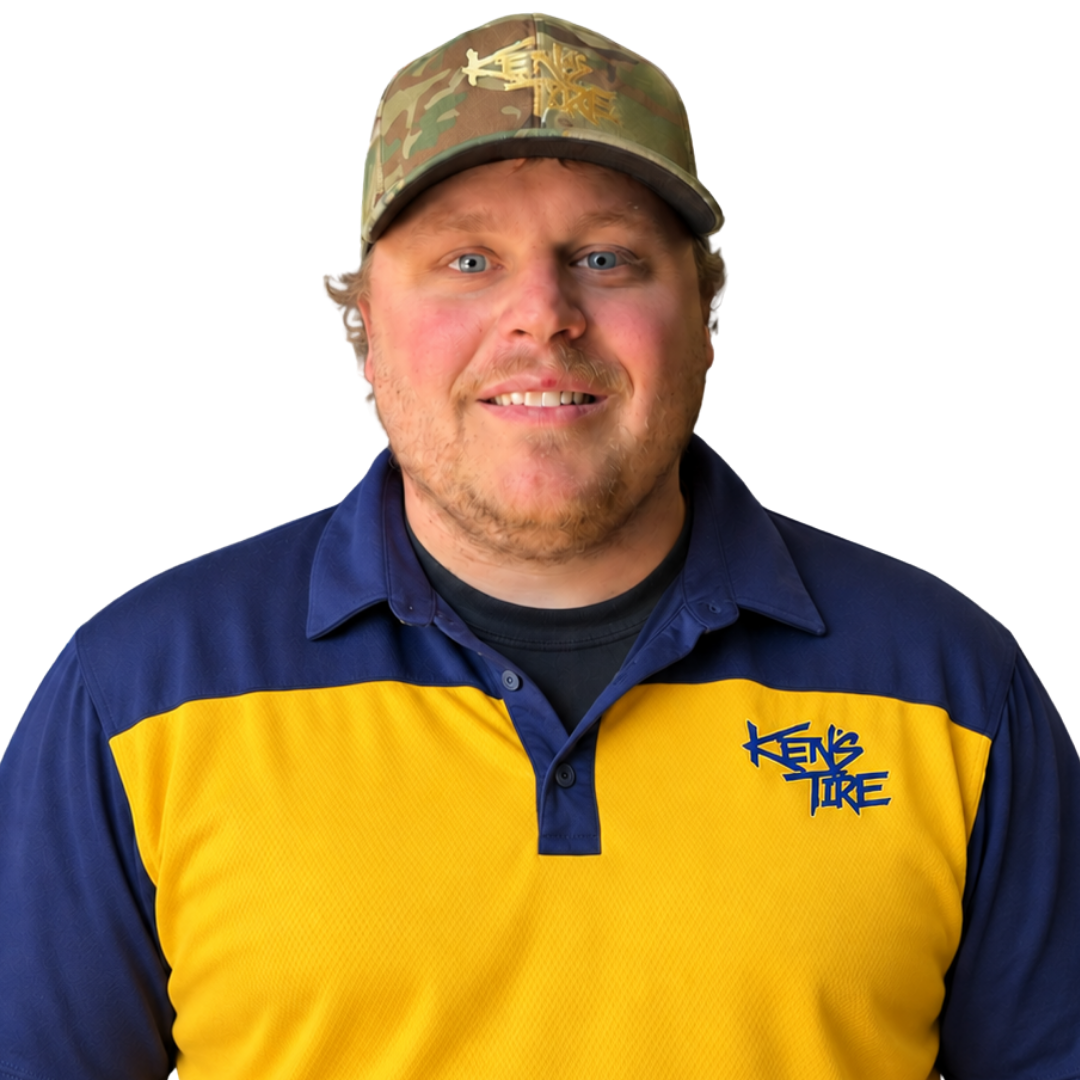
Kyle Blankenhorn is co-owner of Ken’s Tire, a 50-year tire and automotive service business with three locations in Schuylkill County, Pennsylvania, plus a commercial truck tire center and road service operation. Its stores have warehouse space and carry roughly 2,500 to 3,000 tires per location.
Kyle brings an operator’s perspective to tire inventory management, supplier relationships, customer retention, and hiring. He also helps lead a team of about 50 employees and reports very little turnover across the business.
In this episode…
Tire inventory creates two expensive problems: empty racks send time-sensitive customers elsewhere, while slow-moving stock consumes cash and warehouse space. Strong tire inventory management requires enough size and price-point coverage to serve the local market without treating every available tire as a necessary purchase.
New vehicles continue to introduce additional tire sizes, making broad coverage harder for shops and distributors. Kyle’s position is practical: customers often buy the tire that is available because waiting until the next day interferes with work and daily responsibilities. The shop with the tire on hand often gets the sale, regardless of brand.
First tire sales also shape the long-term customer relationship, at Ken’s Tire, repair work follows the trust built through tire sales, consistent service, and quality work. Customers return over time, and entire families continue using the business.
The same operating discipline extends to hiring. Kyle prioritizes consistent work history over formal credentials because technical skills can be taught. A dependable employment record gives him greater confidence in the time, energy, and money required to train someone properly.
Here’s a glimpse of what you’ll learn:
[03:33] From career pivot to tire business leadership
[05:38] Strategic tire buying and supplier relationships
[08:06] Inventory capacity, product mix, and sales
[11:36] Aging vehicles and rising repair demand
[13:37] How tire sales build long-term customer relationships
[16:55] A retention-focused approach to technician hiring
[21:22] Hands-on experience as a technician training standard
Resources mentioned in this episode:
- Ken’s Tire Website
- Tread Partners
- Gain Traction Podcast on YouTube
- Gain Traction Podcast Website
- Mike Edge on LinkedIn
Quotable Moments:
- “The more you have, the more you sell.”
- “Bottom line, can’t sell from an empty cart.”
- “But he who has it is going to sell it.”
- “The only thing that matters to me is work history.”
- “I can teach you the rest of the way through.”
- “I do not want to train new people every six months.”
Action Steps:
- Strengthen tire inventory management with a location-level report covering the past 12 months of sales. Separate high-volume sizes, steady sellers, aging inventory, and products with no recent movement.
- Track every lost sale caused by unavailable inventory for 30 days. Record the requested size, preferred price point, available substitute, and whether another location had the tire.
- Set minimum and maximum stocking levels for each store based on local sales history. Transfer existing inventory between locations before placing another order.
- Build a supplier reference sheet covering primary contacts, alternate sources, lead times, payment terms, and direct-buy opportunities. Review the list with every store manager.
- Add consistent work history to the technician screening process. Ask candidates how long they stayed in previous roles, then invest training resources in people who have demonstrated reliability.
Transcript
00:00
My hiring philosophy is is slightly unique. I don’t care about college, and the only thing that matters to me is work history. Within the last eight years, you held a job somewhere, as we all know. You’re going to have a shitty day, and you’re going to want to quit, and you didn’t. And that’s the only thing that matters to me.
00:19
Welcome to the Gain Traction Podcast, the official podcast for tire business. I am Mike Edge, your host, and I have the great privilege of connecting the industry by interviewing the best people who work in tires and auto repair. This episode is powered by Tread Partners, the leader in paid search marketing, which includes Google Ads and LSAs for multi-location tire and auto repair shops. To learn more about Tread Partners. Visit treadpartners.com. Hey, folks! Welcome to the Gain Traction Podcast, the official podcast for tire business. My guest today is Kyle Blankenhorn. He is a second timer on the podcast. He was originally on episode 86, I think he’s going to be like episode 248 now. He is co owner of Ken’s Tire in Cresona, Pennsylvania, and it’s an honor to have you back, Kyle.
01:11
Hey, thanks, Mike. Appreciate it, bud.
01:14
Yeah, I don’t think I was not the one that interviewed last time. That was back when Neil was still doing some interviews. Yeah, I think Neil interviewed you, and we and we didn’t have video then, so we’ve come a long way.
01:25
Yeah, Neil’s a good dude. Yeah, it’s but it’s nice to meet you.
01:30
Yeah, well, I’m I’m glad to have you back on. You you guys have three stores in Cresona or the area of Cresona, Pennsylvania, and what’s that?
01:41
Yeah, we have three stores in Schuylkill County, Pennsylvania, and a commercial truck tire center, and we do road service and all that, Jess.
01:48
Yeah, so you guys are really-I mean, you got a-you got a solid footprint where you are and everything. And if you don’t mind, back up a little bit and tell us-you know how you guys got in the business, and and then how you kind of you you you kind of came into it reluctantly at first, didn’t you? And then you fell in love with
02:08
- I didn’t necessarily fall in love with it. I fell in love with a girl, and then I had to stay here to run the business or to work the business. So just be honest with you. So yeah, I grew up in Iowa, and I I have nothing against Pennsylvania. Pennsylvania has a lot of great folks in it, but I miss the Midwest. And so I grew up in Iowa, and I went.
02:32
I got a question for you: Are those deer? Are those Iowa deer? Are those Pennsylvania deer?
02:37
Oh, there’s yeah. So there’s some over here on the side that are PA bucks, but the three that are mounted in the in the middle are Iowa deer, and the the one in the middle, I was 19 and I shot that deer with the bow. That was the 16th largest deer ever killed in Iowa with any weapon.
02:57
Wow.
02:58
Yep, I shot him with the bow at 10 yards. That’s bow hunting archery has pretty much been my passion, you know, for my life. So that’s what I enjoy. That’s one of the reasons why I miss the Midwest so much. But Pennsylvania is a lot of fun too.
03:12
That’s cool, though. Yeah, no, those are three beautiful deer. If anybody’s looking, if you’re if you’re watching the show, then you can see those three beautiful mounts, and you got a drop tine on one of them. That looks cool too.
03:24
Yeah, yep,
03:25
yeah.
03:26
I grew up. I grew up in the heyday of of deer hunting Iowa before television. Before it was cool.
03:33
So anyway, you’re you’re out in Iowa, and then how did you end up back in Pennsylvania to get in the tire business?
03:40
I went to school to be a cop and hated it. I got out, so as part of my as part of to graduate from my college, I had to do an internship with a police department, and so I spent 160 hours over a summer riding around or whatever with the you know basically doing all the different aspects of that, and I hated it. So I was the guy that went to college and got a college degree and found out this is not for me. Oh
04:06
man, that’s just that’s a emotional bummer, isn’t it? It’s like a balloon popping, yeah, yeah. But
04:11
I
04:12
went to work for TSA in the airports in Cedar Rapids Airport, and that was a lot of fun throwing away bottles of water and stuff like that. You’d be surprised what we find. I have a lot of really great TSA stories that I can’t say on, you know, public
04:26
video. Yeah, yeah, right. But
04:28
really good time. And I called my grandmother and said I’m just going to come back and change tires for six months. And I did met a girl and never left. And then a few years later, I married the girl. And then down the road a couple years, kids and house, and I even got the dog and all that that goes with it now. So that’s how I ended up in the tire business.
04:49
But it’s been good to you guys, right? I mean, you guys have really grown a lot in the last several years, and and and overcome some pretty good mountains, from what I understand.
05:00
Yeah, yeah, I’m too dumb to quit.
05:04
I know, I know. There’s tire dealers out there right now laughing their head off, thinking the same thing. That’s too dumb to quit. Well, but you know, you guys have come a long way, haven’t you? I mean, and and you you’ve learned a lot about buying and selling. I mean, from what you told me, I mean, you you like to be a good buyer. You kind of take pride in the fact that you you try to buy right so that you have tires right for your clients, customers.
05:30
Yeah, absolutely. So we buy we buy direct from a number of different places, and then there’s there’s always somebody out there that’s willing to offload that’s overbought. So through various connections and and and then also you know it really all it is is just going to SEMA for a few years and making a few contacts and then you know as word gets out you pay your bills people just start knocking on the door and okay
05:55
you you just said two things that I think are important I’ve I’ve always tired tire folks that that and tire dealers you got to go to SEMA because you can work good deals. You get quick relationships. At least you you meet people in the business that you just don’t have a chance to meet. And especially if you’re in Cresona, Pennsylvania, I mean, it’s just a great opportunity. It’s like fish in a barrel. Everybody that’s selling anything is at SEMA. Now they may not have the big booths anymore or whatever, but they’re out there. Everybody’s out there, and and the opportunity is you might run into somebody that you can make a deal with, like you’re talking about, and you build relationships quickly. But the other side of the coin is, if I remember right, you run, you guys run yourselves pretty much debt free, correct?
06:37
Yeah,
06:38
yeah. So that you know, I always think you know, cash is king, and when people know that you can pay and you pay well or fast, yeah, you you get more people’s attention. I’d say.
06:49
Oh yeah, if you’re going to give me anticipation, I’m going to get it.
06:53
Yeah, I mean that’s just the reality of life. I mean, and I think I think you know when you have a reputation of being able to pay whatever is necessary to to put down a down payment on a good deal or whatever they’re going to give it to you. And we’ll talk about a little bit about some of those relationships that you developed out in SEMA. Did you were you just walking around and and opened a conversation with different tire dealers? How’d that work?
07:20
Yeah. So you just just like knocking on doors for permission to go hunting back in the day. I mean, you just walk up, you just introduce yourself, and you try and have the the best engagement that you can. I’ll tell you what would be nice now. If I was new and I had to start over and do it again, I would go get myself those meta glasses that are that’ll do the interpreting for you, so that you can have more open conversations, because not everybody speaks English. There’s a lot of folks there from Southeast Asia and stuff like that. But yeah, it’s just networking. You just gotta just get immersed in it and and and network. And I don’t know, it’s hard to explain outside of that.
07:59
Now, what kind of storage do you guys have for tires.
08:02
Well, we do have a warehouse, and all of our stores have warehouses in them. So our our salary, on average, what
08:11
what type of square footage do you have at each store?
08:14
Four or 5000 square, probably 5000 plus square feet, right around 5000 square feet.
08:21
How many units do you? How many units do you like to store at each place?
08:25
The 2500 to 3000, probably.
08:28
Okay,
08:28
- The racks are pretty. The racks are pretty tall, so they’re based. They’re essentially pole buildings with racks that’ll hold four high, and they’ll hold you know a couple of different something cheap, something good, or something cheap, and a couple things good in each size. Try to. What
08:47
have you noticed? What have you noticed about the benefit of having that many tires on hand?
08:54
The more you have, the more you sell.
08:56
Yeah.
08:56
Bottom line, can’t sell from an empty cart.
08:59
Yeah.
08:59
That’s that’s pretty. You know, and then as and it’s really become a benefit as well because as the industry decides to shoot themselves in the foot from the perspective of hey, every time we come out with a new car, we got some guy out there dreaming up a new tire size. It’s impossible for more people to hold all of that, including the distribution centers. So he who has the tire in stock oftentimes gets the sale, and regardless of brand, because folks don’t want to wait for hey this you know I can get you this, but it’s going to be tomorrow. Well, I’m supposed to be at work, and I’m not going to take a vacation day for a tire. You know, so they’ll even buy you know that one off, and they’ll order the right tire. You end up selling two tires, or you know, however it may work. But he who has it is going to sell it. That’s that’s a
09:50
great philosophy. So when when in the process that you guys were growing as a business, where did you always have that? Any tires in stock, or did you just slowly get to a point where you knew what you needed to accumulate? How did how did you gain that knowledge to know what you needed, and then and then keep it at a certain level? I mean,
10:12
I had a lot of them that I grew tomatoes out of three years later. That’s what happened.
10:19
Okay, but I’m not
10:21
an astronaut, Mike. I’ve hit every branch on the way down the tree, and then I just climbed it again. I mean, if there’s a mistake to be made, I did it.
10:29
Oh, that’s priceless. But do you feel like you’re at a happy balance now? I mean, do you feel like you’re balancing now? Like, I mean, in regards to that inventory level?
10:37
Yeah, yeah, absolutely. Yeah, I’m definitely getting better at it, you know. However many years down the road later it’s been, I’m definitely getting better at it. And does
10:46
your state have that county information or by county the cars owned and the and the data that’s available on sizes and things like that, or do you buy that from somebody else? Like what the most prominent car is, which leads you to know what the most prominent tire sizes are in the market, etc.
11:03
No, I don’t. I’m not familiar with that at all.
11:06
Okay, yeah. There’s there’s some data out there that you can actually buy that’ll help you with that if you ever think about it. If anybody’s listening, but yeah, it’s gives you. It’s not exact, but it gives you a pretty close idea of what what the most popular tire in your market is going to be based on the the cars sold in that market or license? Yeah.
11:29
Well, the average cars the average car is older than it’s ever been, is my understanding. I I believe it’s like 13 years old or something like that. Yeah, I think I think
11:36
we hit 13 this year. Is now the new average, and and they don’t suspect it’s going to stop growing, you know. People are going to continue hold.
11:43
Well, interest rates are awesome right now, so I think it’ll probably, you know, one of the guys was just here at work with me. Was just talking about the interest rate on his vehicle, so I I expect that to continue to get older. Yeah,
11:56
yeah. Well, and it’s listen, it’s just if you look at new car purchases. I mean, it’s just it’s expensive. You know, I’m
12:05
proud of them. That’s for sure. Yeah. No,
12:07
I mean, you know, you’re talking about prices that that just. I mean, you know, you you get into f1 50 land. I mean, an f1 50 is or 250 and 350. I mean, you’re talking about. I mean, they’re the Cadillacs of today. You know. I mean, it’s it’s like they’re they’re premier and what they have with them and the packages and and the you know and then yeah, so the it’s getting to where the the the car market definitely it people are just swimming in the used market more than ever now.
12:39
Yeah, we’ve seen a huge influx, and they’re
12:41
willing to get more repair with you’ve done it, yeah,
12:44
yeah, yeah, a lot more repairs. You know, a wise man once told me that a good good economy is good for the tire industry, and a bad economy is good for the tire industry.
12:56
Yeah.
12:56
So, and they say, you know, as vehicles get older, you know, it’s still okay because you’re going to lead into those repairs and stuff like that. And if you got into a better economy, I think you would see maybe less repairs and and more new vehicles. But for right now, there were just I know like a lot of people out there were just we have more repair work than we can. You know, if we had 100 more technicians, I don’t know that we could maybe hundreds a big number, but if we had 20 more technicians, I don’t know that we could even handle all the work. You know,
13:27
that’s amazing. It’s
13:28
just out there. How important is tires in the relationship and developing relationship with the customer? You know, I mean, I’ve got a lot of folks who tell me that they just believe that tire is the the initial, you know, in the door relationship, or it could be the glue to the relationship because they come back for free rotations, things like that. Some people, you know, I know one tire sales trainer that used to own shops. He’ll flat out tell you that we would never let a tire cell get away. He goes, but you know, there’s a there’s still just automotive shops out there that they sell they sell tires.
14:01
My lights on a timer.
14:04
They sell tires, but they don’t. They don’t push them. And I, you know, there’s a there’s different obviously beliefs out there. And I know some very successful people that don’t push tires at all. Maybe it’s 10% of their sales, but there’s others that said no. I I fundamentally believe that tires is what makes my service go, and vice versa. So I want to have tires on hand, like you, and and sell them.
14:29
We don’t necessarily push. I wouldn’t say that we really push anything. We’re just here to help the people that come in the door, and I think that’s been a.
14:39
I guess what I mean, though, you’re you’re carrying tires to sell tires, and you promote that in your name. So you’re you are a tire shop in people’s mind, where there’s some there’s some folks out there. I mean, automotive shops in particular just say we’re we’re they give the impression they’re strictly automotive. Now, if you ask for a tire, they they’ll get you one. You know, they’ll order it from their distributor. But it’s not like promote themselves in the tire business per se. Whereas you guys, you’re called Ken’s Tires, so you’re selling you’re selling tires. You want to sell tires, and you’re letting them know that you’re a one stop shop. And I’m just kind of figuring out, like in your market, how important it is to be all in one.
15:16
I don’t think that it’s very important to be all in. I mean, we are all in one. I can’t say that if I had it to do over, that I would be an all in one shop. I’m. I think you can make it work on, on just good customer service and quality work in either avenue. I think that’s what speaks volumes. Like we’re a we are a tire shop. We promote tires. If you want tires, we have them. If you want service, we have them. You know, I say to people like we’re like the grocery store. If you want chicken, okay. If you want pork, okay. You want beef, okay. You know, we can do it all. We do a lot of different things. That’s what makes Ken’s tire so so great. Is we can do the commercial truck, we can do the mechanic, the the the light mechanic work, the inspection related mechanic work and the tires, but I wouldn’t say we’re loaded for bearing it in that much more of we’re you know we’re not really out there trying to sell service work. Service work just comes as part of our tire sales that we’ve sold and the relationship that we’ve built with customers over the year through our tire sales and service, and then people just come back. People have just been coming to us, and then you know, entire families have been coming to us. We’ve been in business for 50 years, so I mean, I can take a little bit of the credit for keeping that that boat above water, but you know, I was handed a very good customer base that was
16:42
yeah
16:42
coming here for just quality service and whatever we can offer.
16:48
How do you guys find your technicians and and mechanics?
16:53
So I have an interesting hiring philosophy. So I’m very proud of the fact that I have about 50 people that work for me, and most of them have been with me for I think only about less than 10 of them have been with me for less than three, four or five years, three, four years somewhere in there. So we’re very proud of our employee retention. My hiring little, we
17:14
almost have no turnover. Then
17:17
we have very little turnover. With it does hurt whenever we lose one, we just lost a counter sales person who was here for I think like eight years. The I think the average is it’s up there. We don’t have a whole lot of turnover when it comes to that. But my hiring philosophy is is slightly unique. I don’t care about a lot of things like college or you know, my grandfather used to hire people. He always always used to say, “Look at a man’s shoes. If he if he shines his shoes when he comes in, he’s he’s a good he’s a good prospect. And the only thing that matters to me is work history. That’s what I do. If that’s wrong, then that’s wrong. But that’s the way I do it, because
18:02
and when you say work history, do you mean is does it strictly have to be in the industry? Are you willing to train somebody up?
18:08
No, I don’t care if you’re. I don’t care if you were a server and bartender for the last eight years. The only thing that matters to me is that within the last eight years, you held a job somewhere, and you within eight working somewhere for eight years, as we all know, you’re gonna have a shitty day, and you’re gonna want to quit, and you didn’t, and that’s the only thing that matters to me. I can teach you the rest of the way through. It’s not rocket science. Let’s face it, we don’t work for NASA. You know, we can train you the west the rest of the way through, but work history is the single most important thing that I look for,
18:44
I I like that as a metric. I think that’s interesting that that that is your lead metric in in trying to find somebody. But it’s it’s almost kind of like what’s his name, the coach for Indiana University, a coach of the football team. He just won the national Title, Kurt Citronelli, or something like that. I’m a hot guy.
19:04
I can’t.
19:05
All right, but anyway, he he ended up. He but he. They asked him how he did it, but he he he only brought people out of the portal that he goes. I look for production. It was almost like if you saw. Did you ever see the movie Moneyball with Brad Pitt? Yeah, how cool that was with analytics. He did it with college football. He said, “I look for production. I’m not looking for new recruits with potential talent and all the great talent they they supposedly have. I’m actually going and looking at the data on people that have been playing at the college level, and then through the portal we recruited them. And I, I mean, it worked. He won a daggone national title at the school that had the biggest losing record of all time. You know, which is it says a lot. And I think that’s interesting that you do that with your hiring process. You’re really looking for production from the sense of your character and your stability that you’ve been. Somewhere that you put in time, and like you said, you’re going to have a crappy day. And I know you’ve had a crappy day within whatever five, eight years, but you you stayed, and now you’re now you may be looking for a new opportunity in life, and that’s that’s reasonable. But they weren’t they weren’t job hoppers per se, like in and that’s what you’re looking for somebody that’s looking for stability.
20:20
Yep, yep. I do not want to train new people every six months. It’s too expensive, and it’s too time-consuming, and it just doesn’t interest me. I would rather spend a lot of time to train one person who has shown consistent work history throughout their working career, and then I feel much more confident in you know, spending the time and the energy and the money into training that person.
20:45
You’ve got some really good nuggets for the listeners today. We get a lot of the owners to tell me, you know, they tune in to just listen and see if they pick up a nugget or two. But I really think the fact that you have figured out a way to carry the right inventory, and you carry, you know where your, you know your balance is, and that, and then the way you hire people. I mean, those are those are two big nuggets that I think are very beneficial to to the folks that like to listen to this podcast. So I appreciate that very much.
21:15
Yeah, like I said, I might be doing it wrong, but it seems to be working for me right now, and and I know I have almost no faith in the technical schools. I mean, I I get the young folks out of the technical schools, and you know they can’t drive manual transmission, and I just feel like they’ve been robbed of their money. You know, it’s it’s uh it’s just a business at that point. And I participated in it too. I went to college and all that stuff, but I don’t I don’t put a lot of weight in that anymore. I think if you’re going to go to college for the right reasons, then go and enjoy yourself and network and you know that stuff. But the the schools, I’m just not seeing a lot of results out of the technical schools, as I am somebody who has spent years in a garage physic, you know, doing the work, yeah. And I don’t think a lot of us learn that way. And to be fair, and I’m I’m included in that. I don’t, you know, if I could watch a PowerPoint and process the information, I don’t think I’d be selling tires, you know. But I, I think if if I get my knuckles bloody a little bit, you know, wrenching on a car. I pretty soon I figured out. You know, so
22:24
no, it’s it really is interesting. I I look for people that just I I think the key to life is you’re looking for the people around you that that want to continually learn. I mean, they’re willing to read, watch YouTube videos on how to do something, whatever it is. They’re they’re not afraid to learn and adapt, and I think that’s the key to learning. I think you know. I think the the big mistake that people think when they go to college or even a technical school is I go get a piece of paper and everything’s going to be better. Everything’s going to be okay, and it’s still you still have to do the repetition. You still have to go do the work. You still have to put your hands in it, and you know what I mean. It’s kind of like I I play golf, for instance, and I can tell you unequivocally. And I think it goes with life in general. You want to get better at something, you got to go out in the range, and you got to hit 100 balls. You just got to keep hitting them. And you got
23:16
YouTube videos till you’re blue in the face, but until you stand up there and are willing to embarrass yourself and hit a couple ground balls down the third baseline at the golf, at the at the tee box. You’re never going to get any better.
23:28
100 100% And and the reality is, you watch all the videos you want, and everybody’s going to tell you something different. There’s a there. Somebody else has got another way of doing it, and there is no magic formula. That magic formula is, and a famous old golfer that used, my dad used to like Lee Trevino. He said the the key is find the stroke that you like and then master it. And then he goes and just keep practicing until you become a master at it. He goes because I can tell you all kinds of little tweaks to do, and there are some of them a matter. But at the end of the day, really comes down to repetition. And I think that in the work world, I’ve got sons, and you know, I just tell them. I said, the most valuable thing you can do for yourself right now is is have a job, keep that job, and do the best you can in that job to where they don’t want to lose you. And eventually, you know, when if you do want to move on to something else, you’re going to have great references and and and the recommendation because of your work ethic at the end of the day. And if you’re always willing to learn and step in and do something, and do a job that, yeah, today that might not be your job, but yeah, you can you can help out the company per se and and do somebody else’s job for them because they’re not there. That’s the kind of stuff that matters. I agree. Yeah. So, well, on a on a personal level, tell me a little bit about yourself. From like, what what do you like to do? What’s your favorite hobby? Hunting, I assume.
24:46
Yeah, I mean, I I like hunting and fishing. Um, I enjoy I enjoy hunting and fishing. Um, as I get older, I find myself doing that less and just spending more time with my. I have two young girls. I just really enjoy hanging out with them and. And you know the picking berries and gardening I’ve found and and you know stuff like that, just cooking and and just enjoying time with my family. Honestly, that’s awesome,
25:13
beautiful. Yeah, I
25:14
don’t golf much, but I I did. I was on the golf team in high school, but I just don’t. It’s just frustrating for me, and I still get frustrated because I don’t play enough to get frustrated. But I, I, I really enjoy it, but I just don’t play as much as I used to.
25:32
Well, listen, my kids have gotten older, so now I’m actually getting back into it because I have the time, right? And I’m don’t I’m not going to their activities, whatnot. So it’s you know I’m still super competitive. So for me, I like now I can put the time in it, and it’s kind of like I’m gonna I’m gonna make my you know I’m I’m gonna do the repetition. I’m gonna put it in, and because I used to play and I still do, I play in scrambles, the charity ones in your area, and all that stuff. And yeah, I’m not afraid to look stupid because I know. Look, I can look like I can look like a world beater on one hoe, and you’ll be like, “Ah, this guy’s must be a scratch golfer. No, no, no! Wait a minute, I’ll show you on the next hoe. Yeah, you know, and then I’ll prove a
26:14
versus a
26:16
completely different game on the next hoe. But that’s that whole repetition thing. If you’re not doing it consistently, then you just you can’t keep it together. But you know, it’s it’s funny. Some of my buddies and I, in our age, we we’re we’re competitive even with each other, and we’re not saying it, but it it goes without saying it. And I even told my wife this last night. I catch my buddy out at the golf range all the time now. He doesn’t even tell me he’s going. I don’t tell him I’m going. And I see him out there. I said I think we’re subconsciously pushing each other because we’re both competitive, and you know it’s almost like, dang, he’s out there. I know he’s out there, you know, and we’re gonna we’re gonna end up playing, and we play quite a bit together. So it’s one of those things where I see him practicing, and it does bother me because I want to, I want to beat him. I mean, I can’t. Right
27:03
when you want to be good,
27:04
yeah. So, anyway, it has been a pleasure to have you on the podcast. I’m glad that we got to have you back on, and appreciate you being a second timer on here.
27:15
Yeah, no problem. Maybe we’ll do like a every three or five years type of thing because I’ll be here for a while. I’m not going anywhere.
27:21
Beautiful. Well, thank you, and thanks to our audience. And we’ll catch up with you later, Cal. Hey, folks. Mike Edge here with the Gain Traction podcast. Real quick, we get a lot of people ask us. They know Gain Traction, but who who’s Tread Partners? Well, Tread Partners is our parent company, and they’re a marketing agency dedicated strictly to tire and automotive repair shops, anywhere from five locations all the way up to hundreds of locations, and primarily one field that is always a pain for most people is paid search or PPC or Google Ads. We see enormous amount of waste in it, and we see inefficient spend in it. If you want to know if you’re doing well or not, give us a call. We’ll help you. We’ll audit your account. We’ll look under the hood and tell you if you’re doing things the right way or the wrong way, and help you optimize that spend. You can reach me, and I’ll direct you in the right direction at [email protected], or feel free to go to treadpartners.com, the website. To all our listeners, thank you for being part of Gain Traction. If you’d like to find more podcasts like this, visit gaintractionpodcast.com. If you’d like to make a guest recommendation, please email me at [email protected]. This episode has been powered by Tread Partners, the leader in paid search marketing such as Google Ads and LSAs for multi location tire and auto repair shops. To learn more about Tread Partners, visit treadpartners.com. Don’t forget to like and subscribe. We will see you here next time on the Gain Traction podcast.
Sign up for the newsletter!
Get notified about updates and be the first to get early access to new episodes.