Search.
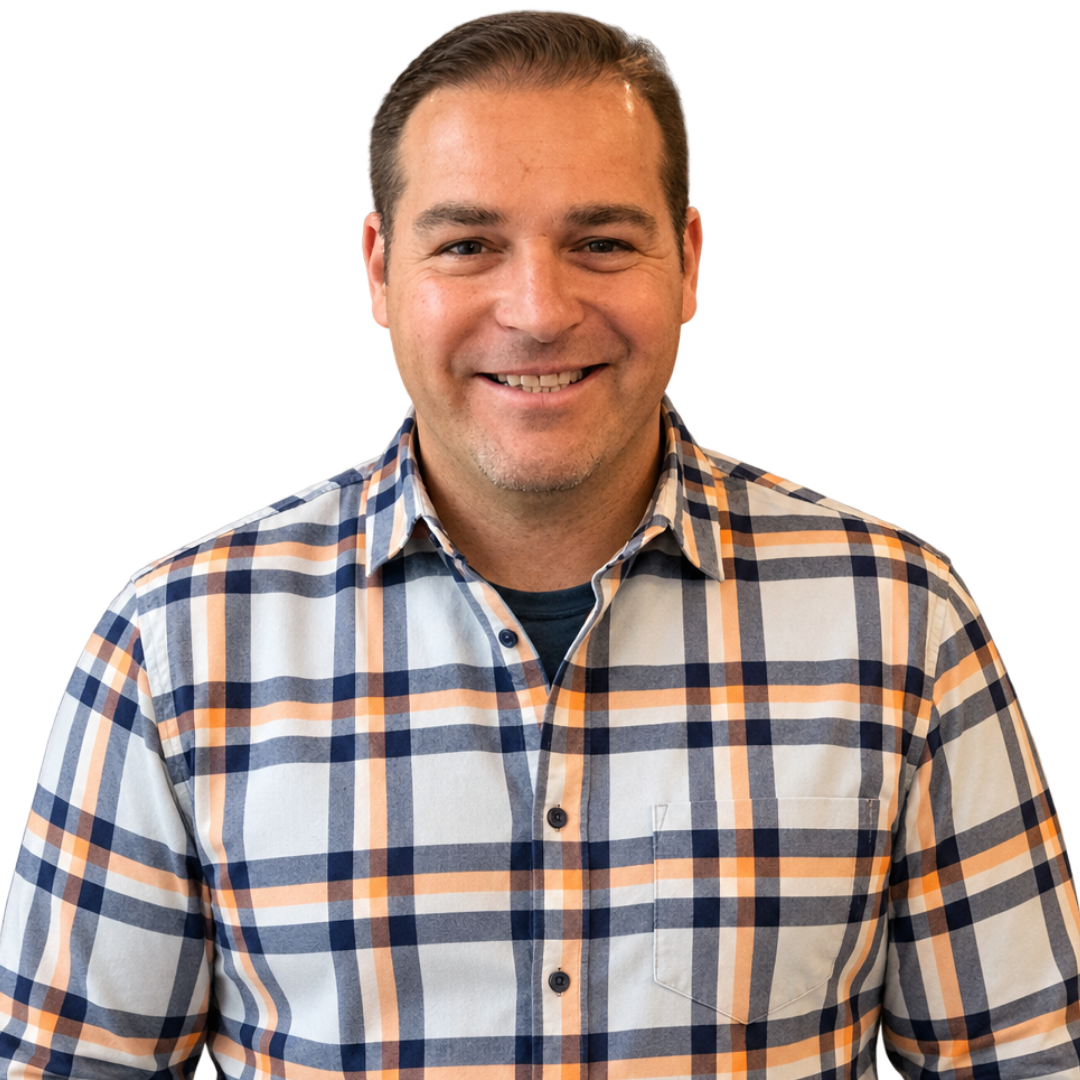
Jason Lightbody is co-owner of Houska Automotive, a 40-bay repair business in Fort Collins, Colorado. A military veteran with a background in tire shop management, he joined Houska in 2010 and helped expand its tire and heavy-duty service operations. His approach to hiring automotive technicians draws on that operating experience and the company’s investment in employee development.
In this episode…
An open technician position puts pressure on the people carrying the workload. Filling the position addresses the immediate schedule, but the person joining the team also needs the skills and support to meet the shop’s repair standards. Across multiple locations, those expectations need to hold from one shop to the next.
Jason describes an earlier approach at Houska that kept production moving but brought in people with little interest in developing a career. The company changed its approach to hiring automotive technicians by seeking skilled candidates and supporting them with strong pay and benefits. He reports low turnover and recalls more than 50 applicants for one technician opening.
Several candidates were worth bringing onto the team. Houska adjusted existing roles to make room, including moving a younger technician alongside a shop foreman for additional training. Recruiting experienced people and developing current employees became part of the same staffing decision.
The commitment continues after the offer. Houska tested technicians on electrical repairs to establish a consistent process and invested in technical and leadership training for managers. For operators overseeing several locations, the practical work is defining the repair standard and giving managers the training to reinforce it.
Here’s a glimpse of what you’ll learn:
[02:03] Building automotive management expertise through tire and repair operations
[04:04] Using tire services to increase customer visits and retention
[11:55] Building a technician hiring strategy around compensation and development
[14:07] Establishing consistent repair standards backed by quality parts
[17:24] Using the 300% rule to guide transparent repair recommendations
[23:04] Managing shop expansion through operational lessons and complementary partnerships
[26:23] Strengthening shop teams through diverse employee perspectives
Resources mentioned in this episode:
- Jason Lightbody on LinkedIn
- Houska Automotive Website
- Tread Partners
- Gain Traction Podcast on YouTube
- Gain Traction Podcast Website
- Mike Edge on LinkedIn
Quotable Moments:
- “100% of those inspections get estimated, and 100% of those estimates get presented to the customer.”
- “We had to learn how to run a tire company.”
- “Leadership is humility.”
Action Steps:
- Make the employment offer concrete. Update the posting you use for hiring automotive technicians with a clear pay range and benefits details. Describe the training attached to the role so applicants understand how they will develop.
- Review staffing needs across locations before making an offer. Have each manager identify the work that requires an experienced technician and the employees who need closer supervision. Assign a foreman and schedule training for technicians moving into apprentice roles.
- Standardize one recurring repair. Ask each location to demonstrate how its technicians perform a common electrical repair. Agree on the procedure and required materials, then review the standard at the next shop meeting.
- Audit inspection follow-through. Review five completed repair orders per location. Check that each vehicle received an inspection and that the findings were estimated and presented to the customer. Address missing steps with the responsible manager.
- Schedule development and invite employee input. Have each manager select one technical or leadership skill to develop and book a training session. At the next team meeting, ask a newer technician to suggest a process improvement and assign someone to follow up.
Transcript
00:00
My dad was a shade tree mechanic. My mom had a little greasy spoon diner attached to a bar. We were poor. We were broke people, man. We didn’t have a lot of money at all, but we spent a lot of time working on cars. And I really learned the appreciation of automotive design. You know, just working with my hands next to my dad.
00:18
Welcome to the Gain Traction Podcast, the official podcast for tire business. I am Mike Edge, your host, and I have the great privilege of connecting the industry by interviewing the best people who work in tires and auto repair. This episode is powered by Tread Partners, the leader in paid search marketing, which includes Google Ads and LSAs for multi-location tire and auto repair shops. To learn more about Tread Partners. Visit TreadPartners.com. My guest today is Jason Lightbody, co-owner of Huska Automotive in Fort Collins, Colorado. Folks, this is a unique shop. Huska has 40 bays at one location on a 16-acre site. It’s an anomaly. I can’t wait to hear more about it. Jason, welcome to the Gain Traction Podcast.
01:07
Hey, good morning, Mike. Thanks for having me.
01:09
Glad you’re here, man. You guys, you got a unique animal out there. You know that, don’t you? We
01:15
Yeah, it’s a lot of fun.
01:18
But what’s cool about it? I mean, you told me you guys fix everything from RVs to Teslas. Is that correct?
01:27
That’s correct. And yeah, RVs, Class A’s, Lamborghinis, Ferraris, Teslas, Nissan Leafs, Duramaxes. It don’t matter what it is, man. We work on them, and we’re good at it.
01:39
Well, I know that one of the things you guys do is take pride in the the your employees, and and you know that your employees set you apart in the sense of their their skill sets and whatnot. But before we get started, tell us a little bit about Jason and how you how you got where you’re at, but where where you grew up originally, and and you know what was life like?
02:03
Yeah, I grew up in Central Illinois in Peoria, Illinois. My my dad was a shade tree mechanic. My mom had a little greasy spoon diner attached to a bar, and we were poor. We were broke people, man. We didn’t have a lot of money at all, and but we spent a lot of time working on cars, and I really learned the appreciation of automotive design and the way the vehicles operate. And you know, just working with my hands next to my dad. And you know, some years later, I joined the military and moved out here to the west. I was stationed up in Cheyenne and met this this beautiful young lady, and it turns out her dad owned a shop in Fort Collins, Colorado. And when I separated from the military, I we we made a permanent move to Fort Collins, and I started in the in his family business with with her father and her brother, and then I got got a little too big for the pond I was in, and wanted to move on to something bigger. So I worked at a tire shop for about five years, a locally owned franchise, a Goodyear franchise, and moved up into management there, and and found that that was my real passion was automotive management. And when I came to Huska Automotive in 2010, they they did not they did not have a tire program. They were the biggest shop in town. We we had one building. We had about oh gosh probably 12 technicians and and five or six lube techs. So it was it was a decent sized shop, and you know it was generating some good revenue, and I had a harebrained idea to open up a tire shop right next door, and that kind of turned into a heavy duty shop and a retread plant and all kinds of stuff, man.
03:53
That’s awesome. Well, I mean, you saw obviously you saw an opportunity that they didn’t take advantage of or whatever, and decided, hey, the tires is going to be a good fit here, right?
04:04
Yeah, you know that when when you’re a flat rate technician, a lot of times those guys don’t like to get a tire sale because $1,000 in tires or $1,000 in repairs is is how they they feel. But here at Uska Automotive, you know, we see that as the opportunity to retain that customer and establish that relationship, and instead of seeing that customer once or twice a year, we’re seeing them, you know, three or four times a year. In 100%
04:32
yeah,
04:32
yeah, and it keeps keeps that customer out of someone else’s bay.
04:36
100% I have tried to stress that to people before. That and look, I’m just a witness. I’m not in the business, but I get the witness a lot. And I think you got to be in tires and automotive repair. And the tire guys will tell you, yeah, I make all my money on the automotive side, the service side. But if it wasn’t for tires, I wouldn’t have that longevity of those relationships. And like you just said. They’re my customers. Their cars end up in other people’s bays that I don’t want them in.
05:05
That’s correct. I don’t want anyone else to touch that car ever. I want everything done at my stop.
05:10
I agree, but you know, there. It’s funny because listen, customers. Obviously, it’s interesting. You know, if you’re a really good shop service wise, people will go to you, but it’s always in the back of their mind. Man, I I wish they sell sold tires, or I wish you know. Everybody wants convenience today anyway, and they want that one stop shop, that one one group. They don’t have to go to multiple places for you know an oil change tires and then service somewhere else, you know, and
05:44
I think I think the the customer purchasing habits have shifted, whereas a lot of folks and there’s still that need for that, you know, real economical repair. Some folks are just at that point in their lives, and we do offer that economical type repairs to to match the needs, but our customer base here is they’re such that they they they recognize quality, they recognize a good name, and they’re they’re willing to pay for that and willing to drive for it as well. We have folks that will routinely drive, you know, from 40 or 50 miles away to have us perform service on their vehicle,
06:22
man, and and then the convenience factor that that just nails it down even more. Speaking of which, you made me think of a story. I’ve got a, I’ve probably told this one before on on the podcast, but I got an. He’s older than me, but he’s on this. Have you ever heard of a Lee’s Chicken? You ever heard of Lee’s Chicken?
06:40
I have not, no
06:41
sir. Yeah, it was a spinoff of KFC. Some family member, whatever. They anyway, they grew to about 140 stores or something. That’s it. And I know a guy that owns two of them. Anyway, it’s a very good product though. And he was telling me one day talking about this generation and how the world’s changed in regards to convenience. He had a DoorDash person deliver a drink to his Lee’s chicken in the middle of the afternoon, like two or 3o’clock. Not very busy, and he said, “Hey, who’s this for? And it was one of his cooks in the back. And he’s like, “Why did you? Why do you? Why did you order a drink? He said, “I give you free fountain drinks all day long. You know, he goes, “You can have whatever you want. And the guy goes, “Well, I just really like this drink. And he goes, it’s some specialty whatever. Maybe it was Starbucks. I don’t remember, but anyway, he goes. Well, how much did that drink cost you? And he said $14. He goes, but you only make $14 an hour here. He goes, why would you spend an old hour for a drink? I give you free. Anyway, it was. It’s interesting because Bill’s the owner, and he goes. He was shaking his head to me, and he’s he’s probably in his 70s. He’s like, I can’t, I can’t figure this generation out. He said, I wouldn’t in my lifetime if you’re giving me free drinks. I’m going to wear you out on them. He goes, that’s the way I’m
07:55
going to get diabetes on yourself, man.
07:58
Yeah, but I mean, it’s there is a mindset in regards to that last mile delivery stuff, and then I think it plays over into our industry as well. People want convenience.
08:09
I had a LJ had told me a story. My business partner LJ Huska, he was talking to one of my advisors who was eating lunch. LJ’s office was right off the lunch room in the tire center, and the the young man was eating a like a ribeye, right? Which is a unique thing to eat in the middle of the afternoon during a shift, right? Because you know you’re going to be tired when you get done eating this big old ribeye. So he had a ribeye, he had a side salad, he had mashed potatoes, and LJ asked him. He said, “Well, how much did that cost? And it cost the guy spent like 55 or $60 on the stake, and you know, by the time I got to him, it had to be reheated. It was probably tough like shoe leather, but people are yeah. That these young folks are weird, man. They they don’t hesitate to spend money on some really weird things, and then they’re broke the rest of the time.
08:59
It’s a brutal thought process for me because I even think about like I buy, I buy half a cow every year, and I and I love being and it’s a local you know I know the local farm and everything I know how the cows treat it and everything I love being beef rich in my freezer. That’s right, that’s right, and and it’s but I can tell you I pay I pay like I think this one worked out to be 484, 90 a pound, and that included that after processing, and that included my steaks and my ground beef. So when you think about, you can’t get ground beef for less than six bucks at the store right now. So I get, you know what I mean.
09:37
And you’re not doing it for the the cost savings either. You’re doing it for it’s local. You know where it’s coming from. You know the quality in it. So you would pay what you’re paying in the store. It just happens that you’re getting a better deal on it too.
09:51
Yeah, but the farmer, guess what? He sells me the cow more than he can sell it to a processor. So he’s making more money. I’m saving money. Yeah, it’s just that the. Middleman doesn’t get as much, and it just there’s a lot that’s just cut out, you know, and it really just works out well. But it, oh yeah, the cost factor though makes it makes it an absolute blast doing it this way. But like the steak, it’s funny how I tell people I don’t even like ordering steak out anymore because I can get one at home, make it as good as I want it to, and I didn’t pay four times what you know. I’m saying you know if food costs were typically 25% or 30% whatever, I didn’t pay the bonus. You know, and and I don’t know. It’s just I guess it’s the way I think, Jason. I you know you know, but interesting dynamic. But that kid you’re talking about ordering a steak. That’s that’s mind blowing. I mean, I’m
10:45
a I’m a brown bad guy, man. I pack a lunch, and I’m gonna get in here, and I’m gonna you know 730 to 530 most days, and and I’m I’m eating right at my desk because I just I get so engaged. I love what I’m doing so much. I don’t want to get away from the desk, okay. Yeah. Yeah. It’s even gotten to the point where vendors are like, “Hey, man, let me take you to lunch. And and and my other business partner, John Monks, and I are like, “No, we don’t want to go. We, you know, I don’t want to have to listen to your story and talk about your this or that. I just want to, I want to do my work and focus on my team.
11:18
Yeah, just tell me what you got, bro.
11:20
Yeah, that’s right. What’s special? What’s what are you trying to push? That’s to get that out of the way. I don’t need the free stuff. Give me a better price.
11:29
You would be my ideal customer. Although I do enjoy, I do enjoy the social times with certain people. Whatever. But look, man, if we can cut to the chase, yep,
11:40
yep, absolutely.
11:41
Tell me, because I know we talked about this the other day. I I love the fact that you know you have the most qualified people in your market to do the work that you guys do. Is that not correct?
11:55
It’s not just in our market, Mike. It’s it’s in the region. Okay, we we are intentional about the process of hiring and onboarding. You know, years ago, LJ and I, who do the majority of the hiring out of the tire center, because you know it’s a it is can be a high turnover area with young folks kind of trying to decide what they want to do with their careers. So you tend to have a little more turnover in the tire center, but we would just, you know, basically if you could fog a mirror, you could you could turn a wrench for us, and we we found that those guys weren’t they were great stop gaps that to keep production going, but they weren’t really trying to do anything with their lives, or or or to grow, or they had no vision for what they wanted to be. So, we we we set out to hire the very best technicians we could find, and and reward them with amazing pay, a very robust benefits package, and and as a result, we have very low turnover. And when we do have a spot open, I think we had over 53 people apply for our last position that we had open for technician. And we actually had several really amazing candidates. To so what we did was we we moved a couple guys over. Well, a couple guys got changed over to apprentice technician. We had a young guy that was in a bay by himself. We moved him out and put him in with a shop foreman so that he could do some additional training. So we’re able to bring in a couple technicians, and it’s paid off huge dividends. You know, when you can, you’re like Jim Collins says. You know, you got to get people on the bus, and then you figure out where you can put them. Sometimes,
13:44
oh, so I love that strategy. So basically, you you you didn’t. I mean, I’m. I don’t know how many had, but if you if you got multiple, you don’t let them go. You just figure out a place to. Yeah.
13:56
Yes, sir. Yes, sir. And then bring and
13:58
then bring them along the Huska way and training and all that stuff, and just keep them in the fold. That way, they don’t get somewhere else, and you got to chase them later. Maybe, yeah.
14:07
The Huska way is is a big deal around here, man. It is, you know, there’s a couple of us that started talking about it, and the Huska way is doing it the right way, regardless of the cost, and and everybody says that everyone’s got that. Oh, we do everything the best way for the customer. But we’ve been in those shops. We know that they are holding things back. They’re taking the easy way. They’re buying an inferior product so they can increase their gross profit. And that’s not us. We we for instance in my heavy duty shop. We we made all the the guys, all the technicians do multiple electrical repairs, so we could test them out and and look at how they did that process, so that we could streamline everybody doing it the exact right way. And we buy premium electrical products, so that when we’re doing this work, our customers getting something they’re never going to have to. Worry about again, and our customers appreciate that. And through three generations of of the Huska family that have been running this business, we’ve gained that that reputation for doing the quality work with the quality part and standing behind it. We had we have a customer, a beverage distribution company. They they they used us for the majority of the repairs. They had a Ford product that they they had to take back to the dealer, and it needed an engine. And we we know that engine failed for whatever reason. It wasn’t our fault. We know that for sure. But the the dealer hadn’t made the comment to them that they thought it was something we had done wrong. Well, we replaced that engine. We didn’t charge it because we appreciate that customer, that relationship, and and we know when you partner up with Husker Automotive, whether you’re a customer or a technician, you’re buying into that Huska way. You know, the repair may take a little bit longer, or it may be a little bit more complex. But you’re you’re getting 100 the real deal with my guys, and that and that goes from the guys in the back to my my commercial tire guy to my my diesel emissions inspector, the advisors, the mid level manager guys that we’re training up. Heck, we got four guys at STX right now in Baltimore getting some some high quality technical and leadership training. We set four of our our top managers out there, and you know that’s not cheap sending four guys to Baltimore to stay at a Gaylord for five days.
16:43
No, that’s awesome. But you know the I guess what you’re selling in a way, and and you and you’re convincing, you’re showing your employees this is what we’re going to do, no matter what. We sell peace of mind.
16:54
That’s right. Like
16:55
you know, and that’s a hard thing to convey. It can only be done through adversity and through time. And when someone recognizes that you’re willing to replace an engine, I mean, obviously, I think I think what’s interesting about your mindset, and I’ve only met a few people like you guys, where no matter what, we’re going to eat it. And at the end of the day, I mean, you can take advantage of us maybe once or twice, but at the end of the day, you’re probably you’re probably the same type of person is going to fire that bad customer if if they’re always trying to scam you, but
17:24
I don’t. I think those. I think they’re fewer and far between most of the time. I think there could be misunderstandings. I think a lack of communication hurts, but I doubt that you guys have that problem. You know, do you guys do DVI? We do 100. We we we we practice the 300% rule. You know, so 100% of the vehicles that come on the property, they get an inspection. 100% of those inspections get estimated, and 100% of those estimates get presented to the customer. And it’s a soft sell. We’re we’re we’re not trying to break the bank here. We’re trying to build a relationship that’s going to last the next 20 years, and your your kids are going to come in, and their kids are going to come in. That’s how we built this business over the course of 75 years. I’m not trying to kill you. I’m not trying to kill that customer or that fleet manager. You know, I know a fleet manager is going to come in, and he’s got 30 trucks, and and and some of those trucks he doesn’t really care about, and you know, so we don’t hard sell those folks. We just tell them, “This is my job. I’m going to tell you everything that’s wrong. You tell me if you want a price. I got the price right here, but I’m not going to. I’m not going to make you sit on the phone for 20 minutes going over every screw and nut that needs to be replaced.
18:35
Yeah,
18:35
you know, we don’t want to fool.
18:37
As a as a consumer, I appreciate that. I don’t mind you identifying things that hey, this is something you need consider. But when you know you go to the car dealership and they go, you’ve got 35. You go in for like breaks, and next thing you know, they’re telling you you’ve got $3,500 worth of work you need done. You’re like, what? Yeah, the damn thing drives great. I just I came in for breaks, you know.
18:59
And and when those customers come in routinely, I can’t I can’t do your oil changes, Mike, for for for two years, and then suddenly tell you you need $3,500 worth of stuff. Why wasn’t I letting you know ahead of time that some of these things were coming up? Right? Hey, it looks like your shocks starting to leak. They’re getting weak, or you got this small leak. You need to monitor. We’ll keep monitoring it. At some point, we may need to address it, but that’s part of that relationship where you can go back and look at all these DVIs, and you can see I told you you needed ball joints today, but six months ago we told you your ball joints were getting close, and we showed you in the DVI the video of the technician checking them through OE specs to the procedure to make sure, so you knew this was coming, and you’re not surprised and you’re not upset about it because you knew it was there.
19:47
Yeah, and I think I think everybody look. Nobody wants to spend money on their car. At the end of the day, I mean, it’s just it. You know, it’s a necessary evil. You got to you got to take care of it, and it’s gonna. But if you know things are coming. It’s a hell of a lot nicer, and I’m not, you know, when you’re not surprised. It’s, but you know, when when when a shop does you like I’ve been done, or millions of other people have been done, where they bring you out that $3,500 estimate on something that you didn’t ask for, and they’re saying, “Here’s what you need done. You’re like, “What? I’m just coming in for my breaks. I mean, you know, it’s the weirdest. It’s it’s the most awkward conversation too. And then they don’t let you go because they they they’re going through everything with you, whatever. And the it’s the whole upsell thing. And you know, it’s like I’ve gone to my I gone to my dealer because I got the car there, got little you know whatever, and I stuck around maybe for some extra oil changes or something like that, and then like you say, you come back in, you get surprised that one day when you know you need breaks, and then they pop everything else on you. Well, I called my independent guy, independent shop owner, and I said, “Hey, listen, I got a problem. I need to make sure I I need to know if this is legit or not. And he said, “Just bring it here. And he goes, “No, you need about all you need is really your breaks done. The rest is not necessary. I mean, you know, maybe one day it will be, but it’s not like it’s not pertinent to the issue right today. You know, so it’s just it’s all upselling for the sake of upselling.
21:14
You know, you know what’s cool is that we have, you know, we have other other shops here in in Fort Collins in Loveland, and in Windsor, they they bring stuff to us that they can’t figure out because we do have the resources. You know, we have the the scale that we can go out and buy independent. You know, the OE scan tools for everything, and and have that experience with where we have guys that specialize in certain things, and so so the the new car dealers, the independent shops, heck, some of the RV new RV sales companies, they all bring stuff to us, and and we work on that with them and for them and through them. You know, some of the Mercedes dealers, the new new Mercedes dealers, will recommend people to come our way because they’re you know the Mercedes Sprinters are very very popular vehicle and and they’re just so backed up at the dealer that they send stuff to us to have us help them out. So that that’s you know that to me
22:18
you know that’s a I mean that’s that’s a big time compliment,
22:22
yeah,
22:23
yeah, and that’s a that’s a great relationship. If you’ve got that, then you’re obviously you guys in your region, and I like to appreciate you telling me that that if they know that and they recognize that and they’re trying to take care of their customer, then that’s a that’s a that’s awesome for you guys. And you know now you’re in a position which always thinks an advantage is kind of like I don’t know it’s kind of like playing cards and getting your chip stock up or it’s kind of like just being ahead and and the worst thing you can do now is lose it so it’s like you probably tell yourself hey just don’t mess it up right we got to just keep doing what we’re doing and continue to find that I don’t know what’s the Toyota Way, Kaizen or something like that. Where you, yeah, yeah,
23:04
Kaizen, 1% 1% better, right? Just, just continuous improvement. My my service managers, we talk about that, and you know, some days you’re the loser, some days you’re the winner. We just know how that’s life and that’s business. But we, our goal is to be better than who we were yesterday, and we it’s been it’s been a long road through some of our expansions. Dennis Huska, kind of the the you know his father started this business, but Dennis is a guy who really made it go. He said we had got to learn to. We had to grow into our shoes, right? So we kept kept putting on bigger shoes, and we had to grow into those things. We had to learn how to run a tire company. We had to learn how to run commercial tires, and they’re completely different, right? No, had to learn how to run a retread plant, and had had to learn how to get rid of that retread plant as fast as we could. So we’ve we’ve we’ve chalked up a lot of losses over the years, and we we played with with the reputation. We were allowed to to make mistakes with our reputation, right? As in terms of business people, and we’ve learned a lot, and and we’ve we’ve become between L.J. Huska and John Monks, my my two primary business partners. You know, we’re we’re pretty solid operators now, and I I say that humbly. I don’t want to brag because you know we’re we’ve been in a lot of different 20 groups and elite groups and things like that, and there are some amazing businessmen in in our industry, and they they they could be amazing business people in any industry because they’re they’re just smart, good operators. But I would take my two partners over anyone else in this country head to head. I think we just got such a great system here, and and trust these guys. We complement each other, you know. I’m I’m the big vision guy. I’m the dream guy, and John Monks is a numbers. He’s the nerd, and the and the tech guy, and and LJ does a really good job of making sure we all play getting the sandbox together.
25:13
I like that. So John’s the guy that likes to kill the dreams, then, huh?
25:18
He is, man. I tell you, you said it perfectly. I can’t wait for it. You got to
25:21
have that guy.
25:22
Yeah. Oh yeah, man. We it’s it’s an accountability thing, and I’m I’m all passion. I’m I’m ready, fire, aim, and so sometimes I end up eating crow, and but we’ve all been working together. I’m the newest member of the team. I I’ve only been here 16 years, you know, and but man, what? See,
25:42
a John, a John needs a guy like you. Yeah, and I’ve I’ve seen these relationships before, and it was funny one time, I I met this lady, and she was partners with some people in a business, and she said, she goes, “Oh, I’m the, she goes, “I’m the dream killer, and I’m like, “Really, you know this about yourself? She goes 100% She goes, I’m the numbers person, and if it survives me, she goes. But I’m. She goes, I’m terrible about taking chances and dreaming, and I know that there. I need that person, you know. And she was complimentary of her people she worked with or whatever. But like, kind of like you are, she recognized the value. But she goes, unfortunately, she goes, I’m the dream killer in the group.
26:23
Yeah, yeah. I think so. I was listening to Ryan Leake. He has a a book coming out. I think it’s dealing with some about dealing with difficult people or something along those lines. But he was a speaker at what’s called the Global Leadership Summit several weeks ago, and he said, “You know, at your table, you have to have room for the quiet people, and and and the dipper people, and the weird people, and that that’s what where our biggest strength comes from is our diversity and the way we think, and of everybody from the newest loop tech to the most senior master tech. Every single one of us has got something unique that we could bring to this team that’s going to make us stronger and give us that competitive advantage over our our business rivals.
27:12
That I love that, and that reminds me of a famous cliche quote or something. But what is it called? It’s something like if everybody sitting around the table at a committee thinks the same way. We got a problem.
27:24
That’s exactly right.
27:26
And I think part of our, I think I think it’s interesting though, Jason. I think it’s interesting with our culture today. We seem to have a hard time with disagreement. Like in other words, I should be able to get along with everybody on a board and be able to disagree with their opinions about how to proceed with something, you know. But I think we have a culture now that no one knows how to build through that. Like I, it’s kind of like, you know, you you use the word weird. I’ve had people say something about somebody that you know you you you see in an organization where they got dude, that guy’s weird, or this or that, I go, yeah, but you know what I like about him, he makes he walks the he sees a different color, he sees something different than we do, and I like the fact he’s here. I mean, I don’t get along with him on everything, but he still the value is he’s kind of the guy that the way he ticks it just makes everything a little different, you know, and I like that. And now, as long as somebody’s not a jerk, you know what I’m saying. But I mean, like if, but I, I like unique people. There’s something about somebody can beat to their own drum, whatever, and they just, I mean, they the the sky’s a different color in the world, whatever it is. But as long as they’re not a jerk in the sense of just you know total selfishness, all that type of stuff, but yeah, I like I like. Let’s mix it up, man, and let’s not be offended because somebody disagrees with us at the the committee meeting or the board meeting or whatever you want to call it. Yeah,
28:51
that’s right. Yeah, you know that. I don’t know if it’s our our political leaders have kind of sowed this this discord between people, but years ago, you know that when the congressmen and the senators would go to Washington, they they would their family would go with them. They’d spend a lot of time in Washington, so you know they go to the same churches. They’d frequent the same restaurants. So you know you could be of one political persuasion, and I’m of another. But we have respect for each other as people, and you’re right. Those folks could disagree and still have respect for each other. And now everything’s become so polarized. You’re one extreme or the other, and people will tell you in those camps you can’t be friends with other people. And and and I I disagree with that wholeheartedly. I think
29:35
100% I think one of the coolest relationships historically was Tip O’Neill’s relationship with Ronald Reagan,
29:42
sure,
29:43
two massive giants in their parties, and they would have dinner and drinks together frequently, almost weekly. They got along so well, and yet, and yet they battled for their ideas, and yet they knew where they could compromise because when you do that, you you learn. That the other with the sincerities of other people, and you realize, okay, you know, I can give up on this. I can do this. We can massage this or whatever. Instead of always dug in the sand, can’t you know, can’t give up on anything, no ground, whatever. And it’s just a zero sum game all the time, and it it doesn’t work in long run. I mean, it just you know, but it it is that’s that’s very interesting. Well, before I let you go, I got to ask you a couple personal things because I know I know the answer of one of these. I want to talk about it real quick. What’s what’s your favorite movie?
30:34
Oh, hands down, The Godfather. Hands
30:38
and you probably like me. You include two in there as well. I,
30:42
in my opinion, Godfather Part One, Godfather Part Two, they’re the same movie, man. Part One and Part Two, they just you could just watch them in a row. In fact, yeah, every every Thanksgiving I watch them.
30:52
Oh, that’s funny. So, what makes it a great movie for you? What made it what makes it your favorite too?
30:58
It’s a dark movie. It’s got got an amazing soundtrack. The cast, it’s got an all star cast. Amazing acting. The story, you know, it’s it’s it’s immigrants come to America for the American dream. They they make it. It’s kind of a twisted way. The mafia, and they run that business like a great business, but there’s just it’s romantic, you know. Everybody likes to say that I would love to kind of be part of that. You know, you watch Goodfellas, you watch all those different movies, and there’s that there’s that appeal. Something magnetic draws you in, and you want to be part of that. You know, you want to be a a wise guy, and in my neighborhood where I grew up, a lot of gang activity. So obviously, a much different type of gang. This was more, you know, you know, like you would say, like Bloods Crips type gangs, as opposed to the mafia. But yeah, I just I appreciate those guys. They dress good. They they appreciate the fine things in life.
32:02
Well, I I always liked it because there’s this undertone of power that’s going on, and it’s constantly building in the movie, and it’s uh, it’s subtle, but it’s strong. It’s weird. It’s uh, and you know, it’s like I mean, my wife’s appreciative of the movie, but she doesn’t like it like I do. And I do find that with most women with The Godfather, they don’t they don’t grasp it as well because it’s not their personality. Whereas a man who watches that movie and he’s like, “Oh hell, you know, kind of like the you just like you can feel the intensity, you know. I mean, you could feel like you know, like when oh, when the fish was sent to him.
32:45
Oh yeah, Luke Obrazi sleeps with the fishes.
32:48
Yeah, and then you know you could see the callousness of when they had to get rid of the one guy and oh, what’s his name, Clemenza? He goes and he says, “Drop the gun, take the cannolis. Yes, you know, you know, he just killed the dude. That’s like get rid of the gun, but get get the dessert. We got to take that back, you know.
33:08
Yeah, it’s the appeal. It’s like it’s like I’m driving down the road. I see a homeless guy sleeping under a tree. I’m like, man, I could I could be a homeless guy today. That guy’s getting he’s he’s sleeping in the afternoon, and I’m out here trying to earn a buck, man. He’s got no worries.
33:21
Yeah,
33:21
of course that’s not true, but still fun to think.
33:25
No, I mean, I yeah, 100% Well, real quick, what’s what’s a quote or mantra you like to live by?
33:33
Leadership is humility.
33:36
Ooh, that’s good, man. That’s really good. I can go. That’s a that’s a that’s got a lot of depth to it. When you say humility with anything, I like that. That’s that’s awesome. Well, I got to tell you, and I want to give a shout out because Nick Fox. Yeah, Nick, my boy. Yeah, and he’s with Elite, right?
33:58
Yes, I’ll be talking with Nick tomorrow,
34:01
nice. Tell him I said, “Hey,
34:03
yeah, he’s a he’s a he’s a good good guy, good facilitator, and I’m sure he you know from what I know with his business, he was a good businessman as well.
34:12
He was, I mean, when before he sold and all that, but he he Nick and I have hit it off from the beginning when we met, and he’s been on the the show, and I’m glad, happy for him what he’s doing now, and I’m I’m really glad that he introduced us because I think you guys have a really cool operation. And he he knew you’d be a great a great interview, and I really appreciate you being on here. Thank you.
34:32
It’s my pleasure, man. I appreciated the experience. Thank you.
34:36
Well, stay please stay in touch with the podcast. We we’d love to stay in contact with you.
34:40
All right, Mike. Thank you.
34:42
Take care. Hey, folks. Mike Edge here with the Gain Traction podcast. Real quick, we get a lot of people ask us. They know Gain Traction, but who who’s Tread Partners? Well, Tread Partners is our parent company, and they’re a marketing agency dedicated strictly to tire and automotive repair shops, anywhere from five locations all the way up to hundreds of locations. In primarily one field that is always a pain for most people is paid search or PPC or Google Ads. We see enormous amount of waste in it, and we see inefficient spend in it. If you want to know if you’re doing well or not, give us a call. We’ll help you. We’ll audit your account. We’ll look under the hood and tell you if you’re doing things the right way or the wrong way and help you optimize that spend. You can reach me and I’ll direct you in the right direction at [email protected], or feel free to go to treadpartners.com the website. To all our listeners, thank you for being part of Gain Traction. If you’d like to find more podcasts like this, visit Gain tractionpodcast.com. If you’d like to make a guest recommendation, please email me at [email protected]. This episode has been powered by Tread Partners, the leader in paid search marketing such as Google Ads and LSAs for multi-location tire and auto repair shops. To learn more about Tread Partners, visit treadpartners.com. Don’t forget to like and subscribe. We will see you here next time on the Gain Traction Podcast.
Sign up for the newsletter!
Get notified about updates and be the first to get early access to new episodes.