
Search.
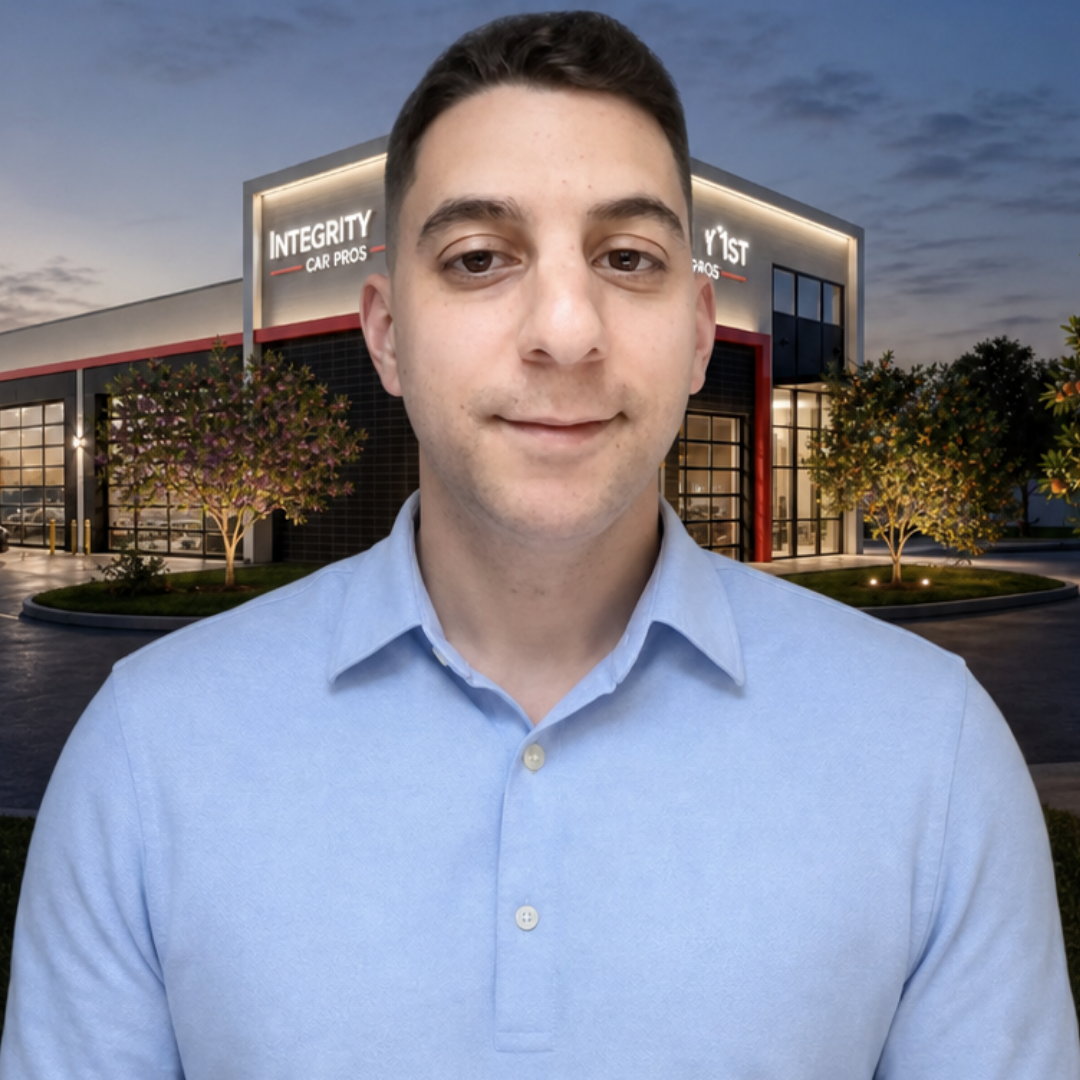
Ron Ramy is the COO of Integrity 1st, a bootstrapped automotive repair company operating 14 locations at the time of this conversation. He joined the company in 2020 when it had four locations, bringing experience in software, automation, data, and organizational growth from his earlier work at a real estate technology startup.
Ramy has worked across departments to understand how the business operates and where stronger systems are needed. His work on franchising an auto repair shop has centered on documenting processes, developing leaders, and creating an operating model that someone outside the automotive industry can learn within 90 days.
In this episode…
An auto repair business does not become scalable simply by opening more locations. Growth exposes undocumented decisions, inconsistent hiring practices, compensation plans that break at higher revenue levels, and daily operations that still depend on the owner. The work of franchising an auto repair shop forces those hidden dependencies onto paper.
Integrity 1st faced that pressure while converting its corporate-store experience into a franchise model. Recruiting shifted from judgment-based hiring to panel interviews, defined questions, checklists, and compensation ranges. Incentive plans also required redesign because structures built for stores producing $1 million to $1.5 million became unsustainable as revenue moved beyond $2 million.
The franchise process also changed how leadership received feedback. Franchisees brought questions that revealed missing procedures, while employees closest to customers provided context that dashboards could not show. Ramy connects that openness to internal development, practical problem-solving, and a hiring philosophy built around character, charisma, and competency.
Tires represent another operational opportunity for the company. They currently account for a smaller share of store revenue, but Ramy views the category as a durable service line with room for growth, especially as vehicle technology continues to change.
Here’s a glimpse of what you’ll learn:
[01:23] How Ron Ramy entered the auto repair industry
[06:32] Why franchising requires documented, repeatable business systems
[14:53] Creating a business that can operate without its owner
[18:02] Why tires represent an untapped growth opportunity
[19:23] Why solving problems matters more than identifying them
[21:58] How employee curiosity creates new leadership opportunities
[29:11] Why character matters more than competency when hiring
Resources mentioned in this episode:
- Integrity 1st Car Pros on LinkedIn
- Integrity 1st Car Pros Website
- Tread Partners
- Gain Traction Podcast on YouTube
- Gain Traction Podcast Website
- Mike Edge on LinkedIn
Quotable Moments:
- “Do I even have a system, or is my business mostly relying on discernment?”
- “Anytime the emotions are seven to 11, just don’t make a decision.”
- “It’s always going to reward the best solution.”
- “And at the end of the day, we are going to always be rewarded in direct proportion to the size or complexity of the problems we solve.”
- “So their feedback is extremely valuable, and obviously, you have to parse through the signal and noise of what they’re saying.”
Action Steps:
- Record every decision that requires owner approval for one week. Turn recurring decisions into written procedures with a clear trigger, responsible role, and expected result.
- Replace informal recruiting with a panel interview, a standard set of questions, a candidate scorecard, and defined compensation ranges for technicians and service advisors.
- Test incentive plans against stores producing $1 million, $2 million, and $3 million in annual revenue. Adjust payouts that become unbalanced as sales increase.
- Assess the operation for franchising an auto repair shop by giving documented procedures to a manager from another location. Track every point that still requires explanation or owner involvement.
- Hold a monthly frontline feedback review with general managers, advisors, and technicians. Record operational gaps, assign responsibility, and test proposed solutions inside a corporate location.
Transcript
00:00
I don’t even know how to change my own oil, for God’s sakes! Right? Even if you are not thinking to ever franchise your business at all, the exercise of turning your model into a franchise model is extremely valuable. Where is my business mostly relying on discernment? Because even if we didn’t decide to franchise at the end of that exercise, our business actually got way better.
00:21
Welcome to the Gain Traction Podcast, the official podcast for tire business. I am Mike Edge, your host, and I have the privilege of interviewing the tire dealers, shop owners, counter sales reps, technicians, industry executives, and other thought leaders of our industry. This episode is brought to you by Tread Partners. Tread Partners is the leading digital marketing agency that specializes in digital marketing for multi-location tire and auto repair shops, Tread Partners works with clients that have hundreds of locations down to five locations. Get a professional, unbiased opinion and let Tread Partners review what you’re doing. It starts with a simple conversation. To contact Tread Partners, visit treadpartners.com. So let’s get started. Hey, folks! Welcome to the Gain Traction Podcast, the official podcast for tire business. My guest today is Ron Ramey, COO of Integrity First Car Pros, with 14 locations in Texas. Ron, it’s about time, but welcome to the Gain Traction podcast.
01:16
I appreciate you having me on. I’m actually a fan of the podcast, Mike, and just looking forward to seeing what I can provide today.
01:23
Thank you. I’m glad to have you. Well, let’s tell the audience. You and I’ve done a lot of talking, but let’s talk about who Ron is and where you came from and how you know everybody always likes to know how did you get into the business.
01:38
Yeah, I think it’s a little bit of an unorthodox story. So I’m here in Toronto, Canada. Although the business, as you mentioned, we’re we’re actually in the DFW in Dallas. And I, I, you know, my undergrad was all in the life sciences, so biology, chemistry. Of course, dabbled in in psychology as well. It was when I graduated. It
01:57
was perfect for automotive, right?
01:59
Yeah, exactly. Yeah, makes so much sense, right? So, I mean, the good thing is, obviously, teaches you about data and experimental design and the empirical method. So that education was valuable. But obviously, when I finished, when I graduated, I’m like, I, what do I even want to do with this? I had always been like a techie, so I’ve always been into software. I grew up with computers my whole life. My father himself was in IT, and so I ended up through a friend of a friend. I joined a startup, and I was their fourth employee. And we built software for the real estate industry. And many people may not know that the Toronto Real Estate Board is, I think, either the top one or top three real estate boards in North America, just in terms of number of agents. So it’s a great market. So I was with that business for about six years. By the by, the end of my tenure with them, we had grown to 30 plus employees. Our annual recurring revenue was in the hundreds of 1000s, and it was just an amazing experience because I got to wear so many hats. And in that time, just like by luck chance, I had met the owner of Integrity First, and I think this was around 2014 or so. I had met him, not didn’t do much with him. He just kind of knew that I was into tech, and he told me that he was into automotive. And not much was there, but he kind of took advantage of the fact that okay, I know somebody now that is in tech, so he’d make me help him out with a few things for free. Hey, can you help me with my website here? Hey, I’m having this problem here. And I think after a few years, he started trying to coach me. He’s like, look, I’m. I really want somebody with your, you know, work ethic, your completely different perspective to join my company. And I would always respond like, look, I. What am I going to do for automotive? I don’t even know how to change my own oil, for God’s sakes, right? So he was like, no, it has nothing to do with that. I’m trying to build something way bigger than just what you’re thinking. I want somebody with an outside perspective, and so he convinced me right when COVID started. So in 2020 is when I I left the the startup I was with and joined Kevin. Kevin’s the owner of Integrity First, and when I joined him, he had just opened his fourth location. And so for the last six years, you could say I’ve just like I did in my previous, you know, work experience, I’ve worn pretty much every hat in the business. Really getting to learn, you know, how the business works, where the opportunities are, especially from my perspective when it comes to automation, technology, just creating departments. And as you mentioned in the start of this podcast, we are now at 14 locations, and and by the end of this year, we should be actually be at 18. We got a a lot going on, so some fantastic growth.
04:25
That’s a that’s a cool story because I think it’s very encouraging for people to hear that. Like you know, you don’t have to be an expert necessarily to get into the business if you just have like you have a good business acumen. So you brought that with you, and a different perspective, I think, always helps. It’s kind of like you know, have you ever sat on a board before? And it could be a charity board, but it’s interesting to have you know different walks of life sit on the board because they they’ll look at something completely different than you, and you scratch your head, thinking, “I’m I’m kind of surprised I didn’t think.” But I didn’t, you know, and I think that’s what you probably bring to Kevin in that regard. I think
05:05
that honestly, we had a really good, and we still continue to have really good like energy together. And and you’re right. The more times you’re in a room where you can say, I haven’t thought of it that way. Honestly, like that’s a gift because if you’re in a room where it’s just yes, yes, yes, it’s going to be very difficult to grow, and especially in our environment, Mike. Like you’re, I mean, you’re in the industry. A lot of the brands that we know and love are they’re they’re backed by private equity or have very different structures. Integrity First is still like a bootstrapped entity, right? There’s no partners. There’s no private equity backing. It really is like a controlled growth, but also self-funded, and so we have a different obstacles to overcome in that sense.
05:46
That’s interesting perspective, and I I do like that because I think what happens when they get to the just call it the private equity stage, a lot of them do talk about we still have independence, but do you do you really? Yeah, your incentives
06:02
are different. You and I both know the incentives become very different, and and oftentimes the playbook is like you know private equity buys maybe like a group. They put them all into an umbrella, and the goal for them is also to sell again. So it’s just that they have very different, very different incentive structure. And we up until two years ago, or sorry, up until last year, we didn’t corporate. All of our stores were corporate owned, and now, like we we talked about earlier, now we’re going into franchising and trying to scale our business through a franchise model, which has been just really fun.
06:32
So how how is that going? And and let’s let’s just put it out there: if anybody’s listening and they they think they want to be a franchisee, how do they go about contacting you as well? I’ll go ahead. Yeah, that’s a
06:44
great question. So we have a website, Integrity One, like the number one franchise.com. So there, you’ll you can learn all about our program. And this is whether you’re just somebody looking to open a franchise, or maybe you’re an existing shop owner, and maybe you want to convert and become and you know join our platform. Both both sides work, but that’s where you go if you want more information or want to reach out to us. And and yes, what it was that process like? It actually took several years before we even released our franchise disclosure document, the FDD, right, which is pretty much the bible to you know start franchising. But that process, Mike, like that process of okay, hey, we have a business, or we we feel like we have a business, we have a platform. Now we need to franchise it, even if you are not thinking to ever franchise your business at all. The exercise of turning your model into a franchise model is extremely valuable, because obviously, when you’re when you’re selling a franchise, you’re ultimately you’re not just selling locations; you’re you’re selling knowledge. So you now have to think about all of your processes, all of your systems, all the things that you do every day, and look in the mirror and ask yourself: Can this actually be taught to somebody who most likely is going to be from outside the industry? Most franchise owners are from they’re they’re doing their executive role, directors, VP from completely different industries, and they want to become entrepreneurs. They want to buy into a system, and now you have to ask yourself: Look in the mirror and say, “Do I even have a system, or is my business mostly relying on discernment? I think most owner operators, and probably the average listener here, is an owner operator. They are making 100 decisions in the day that are probably based mostly on discernment and less on like systems. So that exercise of converting our systems, our principles, our knowledge into something that’s black and blue, like on paper, something that’s replicable that somebody from outside the industry can learn within 90 days, not you know five years. That exercise is just instrumental because even if we didn’t decide to franchise at the end of that exercise, our business actually got way better.
08:45
Oh, I could see that. I mean, that’s a really interesting perspective. All right, give me a give me an example of something that you didn’t think about maybe before, but it’s it might seem minute on the surface, but you still have it in there. Like, I mean, I don’t know what I’m thinking of, but
09:03
yeah, like even like
09:05
maybe even building design, or maybe I don’t know something that that you didn’t think of, and then you realize, well, we got to have an answer for this because somebody’s going to ask us this.
09:14
No, that’s that’s actually a so let me give you a good example would be like in in human resources, like in recruitment, our process was honestly it varied all the time, and a lot of people listening have experienced this. You have battlefield promotions, you have you basically have a a major void that appears. Someone locked out on the job, right? And now you have this major void, and you’re just basically wearing beer goggles, you know, when you’re at the interview, and you just hey you have a heartbeat you have a pulse you hire and so it’s like recruitment was such a again based on discernment or emotion and wasn’t systematic and now imagine franchisee comes to me hey I need to hire technicians I need to hire an advisor how do I do that I can’t just say hey well it depends and you know you you just got to look at them and see their resume no. Have to actually convert that to a system, but hey, you know what? We recommend a panel interview. We recommend that these are the types of questions you’re going to ask. You’re going to have a little checklist. Here are what the salary ranges should look like. So now we had to go from again using discernment to like these are the ranges that we offer. Here are the incentive plans that made sense, and the incentive plans that can actually scale because we found out during the process some of the bonus plans we wrote. They made sense when you know our stores were average doing one to 1.5 million, but then became way lopsided in a way that wasn’t sustainable at two 2.5 million. We had to like redraw the plan to work whether you’re making $1 million a year or $3 million a year. So I don’t know if that’s a good example to tell you. No, it’s
10:40
a great example. I mean, and and what it does, it’s kind of like I don’t know. I mean, you know, I think of my experience with people and companies with mission statements. You know, you can have a really long mission statement, and it just becomes like a wah wah wah wah noise of you know you’re not really digesting it, but it can be real short and simple. And I think about one. I mean, they’re in the industry, Jasper Engines and Transmissions. I’ve been to their facility before, and when you go in their main door, it’s all that’s up there is do it right, dot dot dot, have fun. Well, oh,
11:17
I love that. Okay,
11:18
so it’s very simple. You know, when you apply mission statements, usually it’s kind of like when you’re working for a company and you get into the one of those situations where it’s just you’re just in a tough situation. It might be HR, it might be something to do with you know fixing something or how to take care of a customer or whatever. And then you know a couple minds come together, they’re working together, and they’re like, well, what do we do here? Because this is this isn’t kind of like in we haven’t encountered this before. Well, what’s our mission statement? Okay, well, when you think about, I like this one because it applies so quickly. But when you think about the Jasper engines, when it’s do it right. Okay, what would be doing it right? Now you have a real discussion here, and then you go, oh well, if we’re going to do the customer right, this is the way we should handle it. Well, that’s going to cost us an extra 500 bucks that we really, you know, do we have to eat that? Yeah, we do because we’re going to do it right, you know, or whatever it is. But it becomes
12:11
like your anchor. You anchor your whatever your system, your process, or decision making on your principles as a company. And actually, you’re right. If you don’t actually have any principles, then it’ll be even more random and more ambiguous, and will depend more on the urine with how you wake up. And I was just
12:25
thinking about your HR process. So, like when you have an HR process, it’s now you know you you don’t have the beer goggles on, and you’re going to hire somebody with a born body. You’re you’re going to literally no. What’s our process? We’re going to go back to the process, and we’re going to go we’re going to do it right because this is what we do. This is when we’re in doubt, we go back to the process. Well, that’s what I like about a good, solid, simple mission statement. It’s just, what do we? Okay, what do we do in this circumstance? Because we don’t have this one written down. We just do it right, you know, or whatever it may be. You know, I’m just I use there’s an example. No, I love
12:57
that example. Yeah,
12:59
but but but, and then I like the fact that I always felt like, and I’ve never gotten this completely explained to me, but when I digested it, I always like the fact that says have fun. Well, you know, be in a sense to me, okay, we still got to be joyful about it. We still got to be happy. We got to, you know, whatever decision we’re going to make, we’re going to do it right, and we’re going to make the most of it in in a positive way, because we’re saying have fun. Well, man, you can apply. I don’t know why, but that mission statement has always stuck to me, and and it it can apply in so many circumstances if that makes sense. And you know,
13:33
especially because I I remind sometimes we’ve all been in in these funks where emotions are at like you know seven and up, and and and everything seems like a 911 and urgent. And one thing I always remind whoever I’m talking to that’s we’re in this state is like, look, we’re not a hospital, right? So we’re not. This is not life and death that we’re dealing with here. A lot. We’re just so lucky. Our problems are generally not that urgent, not that detrimental, not that life altering, so we can get through this, and we we honestly shouldn’t have reactions like that. Anytime the emotions are seven to 11, just don’t make a decision. Right, time for you to just calm down, pause, and come back to the drawing board when when emotions have dried up. Because when you make emotional decisions, it’s just not the right move both ways. If you’re overly optimistic that day, you may make a decision that again is unsustainable in the future.
14:23
No, it’s it’s a great way of looking at it. Well, and I just say that with your with your experience with the process, I like that you. But what you how you how you got yourself there, and then how you got to the fact that you know you had to create, you had to look at your own processes, and then you had to think about: Is this duplicatable, and can we get other people to see that it’s duplicatable? And this is what you do. Yeah, I can see where that would help you tremendously.
14:53
Yeah, like you-you can’t hand a business to someone. Okay, now you figure it out, right? Like it just-that’s not that-that’s. Especially a franchise, they’re specifically buying the the fact that we have figured it out, and it’s something that can be digested within, like I said, 30 to 90 days. It’s one of those things.
15:10
Have you already noticed that as you’ve done this? Say you’ve created your franchise book, and now have you already noticed where you’ll add or oh
15:20
every week, every week, right? And I kind of like working with franchisees. Obviously, it’s different from having a w2 employee tell you your deficiencies. There’s somebody that’s put a quarter million dollars, if not more, to start this business, right? So they’re going to be a lot more vocal. And again, they’re coming from a completely different perspective, so they may not be muddied by oh, well, that’s what the industry says, right? That’s not. It’s not something that occurs in their vocabulary. So they will let you know where things have just been. Like, how do I handle the situation? It’s like you’re right. We’ve never actually put that on paper, and maybe we haven’t considered all the different variables. So basically, this whole experiment, like I said, whether you’re thinking a franchise or not, it it especially if you’re the type of entrepreneur who’s still working in the business every day and not really on the business. One of the probably reasons is you are the bottleneck. Like everything has to run from you. You may tell people that, “Hey, I’m the owner operator. I’m the CEO, but in reality, you are this like the chief of everything. And being the chief of everything is just it’s not going to work. It’s actually going to make you probably miserable at some point.
16:21
Well, you you you you never get to walk away from the building and it run itself without you.
16:26
Exactly, and then and again, it comes down to just too many decisions based on like discernment and and no system. So, it it’s been it was crazy getting it built and finally putting it pen to paper. Finally signing our first franchisees last year, and yeah, and. I just think that this is one of the best decisions we made. Of course, I still think we plan to always have corporate stores because these are going to be the best places to run like research and development and and try new things out. I’d rather do it within our control than force like guinea pigs out of franchisees in that sense, making them try new things that may fail. So we’re always going to have corporate structure, but just having that franchise backing, I think, is fantastic.
17:05
I do too. I like it, and I think of like like you said. I don’t know if you meant to go this direction, but you know, when people get skin in the game, they they’ll get creative, and then you can learn from them. And if you get people there from outside the industry, it’s just another fresh perspective. Well, and that’s one of
17:25
my favorite things. Yeah.
17:26
Well, and they’re typically the ones that’ll ask the why’s that you know you’ve been in it a while now, so you’re not asking the same why. Well, why do you do it that way, or why do you you know? It’s like a little three year old going why why why you know, and I think that’s a it’s healthy. I mean, that’s how they learn.
17:42
Yeah, I’m telling you, I love, I love those, and obviously the franchise selection process is its own, you know, ordeal of it in and of itself. But just having the right franchisees also can go such a long way. Like you said, they they are the three year old asking why, why, why, and with the right intention, and they have the same goal that we have. Ultimately, we we’re both incentivized to make sure they win. So,
18:02
so digress a little bit here. Do you guys do anything in regards to tires? Do you guys sell tires? Is it yeah, yeah. So
18:09
I mean, tires is not a large portion of our business, but we make sure that every facility has all the tire equipment as well as the alignment equipment. But we are outfitted to do tire business, and we do tire business with several vendors. It just right now hasn’t represented a significant portion of our business. I think at some stores it may represent up to 10% of revenue, but on average it’s between two and 5%
18:36
Oh yeah, yeah. Well, I have to get you some people that’ll change your mind on that because, I mean, it’s just it’s a big driver. I think I think tires is a big driver in the industry in regards to building the glue in a in a relationship. It can start the relationship, but it can also help you know because you get the you get the rotations, you get all
18:54
the it’s it’s one of those routine services. In fact, we recently hired a new VP, and and he comes from the tire side, and so one and one of the reasons he even made that decision, aside from his other skill sets, is that we recognize that tires are is just such an uncapped opportunity. It’s a great vertical for us, but also it is something that is sustainable even through the EV changes that may happen in the market. Tires or tires are always going to be there, so it is something that we’ve been very mindful of.
19:23
That’s good. On a personal level, what’s a everybody? Everybody knows I like to ask this question, but what’s a quote or a mantra you like?
19:31
So one of my like one of the things I repeat often is very simple: is don’t complain, compete. Okay, so don’t complain, compete. So, like the market is not going to reward the loudest complainers. It’s always going to reward the best solution, and so like it can be anything, any any complaint. Oh, the economy. Oh, the competitor down the street. Oh, the this this customer, right? If instead of asking why is this happening or. You know, you should just always ask. Okay, how are we going to overcome this obstacle? And it doesn’t matter what it is. Just stop complaining. Let’s just compete. Like, what are we going to do to solve this problem, right? And so that’s one of the that’s one of the mantras I always run in my head. And especially if I find myself complaining, right, and we all do internally, that’s where I try to stop myself. No, am I trying to solve an obstacle here, or am I just trying to be half catharsis, right? And at the end of the day, we are going to always be rewarded in direct proportion to the size or complexity of the problems we solve. So the loudest complaints, man, I can’t wait to come up with the most badass solution because the reward for that is going to be totally proportional.
20:37
I like that. I think of it in a, and that’s interesting. You you give me the image. I think of you know it’s the when you think of an obstacle and you think of a wall. Well, okay, I’ve hit this wall. What am I going to do? It am I going over it, under it, around it, or do I have the ability to go through it? You know, and it’s that assessment that you realize I I have to go this way. I don’t have a choice. So what am I going to do to get past this barrier? And I I like the way you you say it again for me. The don’t complain.
21:09
It’s don’t complain, compete. So you you should you know you find yourself and and and look all of a lot of your listeners they have employees and you’re trying to coach them and direct them and you say hey what’s going on what do you think is going on with the sales, right? Or what do you think’s going on with so and so? And a lot of times they’ll just point, right? So to me, that’s a form of a complaint. Oh, it’s this guy right here, my advisor. He’s not really doing well. Or man, this technician’s causing me problem. Or they open that
21:32
shop up three miles down the road, or whatever. Yeah, exactly.
21:35
Oh, they open and look, they’re open on Saturdays. You guys were closed on Saturdays. So again, the question is: Okay, it’s cool you identified the problem, right? A lot of people think the gift is that we know how to point at the hole in the wall. Look, look, I see all the holes. Okay, great, that’s that’s cool. The real skill is how are you going to fill that hole up? How are you going to make it stronger? How are you going to make the hole? So true.
21:53
Everybody thinks they’re so smart because they identify the same hole everybody sees. Yeah,
21:58
I mean, come on, and we all see the hole in the wall. I’m looking for solutions, and that’s really what gets rewarded. And I, we, one of the things that we love doing here is part of our culture is like exposure. So it doesn’t matter if somebody wants exposure in our business; they want to really understand how the P&Ls work, or they want to understand the inner functions of why we made certain decisions. We don’t like put them in a hold wall and kind of say, hey, well, this is your lane. Stay in your lane. Like we reward curiosity, and that’s probably because we ourselves in leadership are extremely curious people. Kevin himself is very curious. I’m very curious. We just love learn, kind of like how you love biopics. Like we just love learning fresh perspectives, and we always reward that. In fact, if you think about, we had a VP prior to the current VP. He’d been with one of the big box brands for 13 years. Okay, pretty much in the same role. I want you to just consider this now: 13 years in our company, the amount of exposure he received in two years with us, two years, that amount of exposure put him in a position to do his own business. So imagine the 13 years you’ve kind of been in this silo, kind of doing day in day out with us. We just so much exposure in every department. Didn’t matter any question, we’re going to show you how it worked, and you leave with that confidence that oh my god, I I actually understand this model. I’m not I’m no longer in this silo. I would always hear from like whether they’re regionals or above. Oh yeah, didn’t really get. I didn’t really know how marketing worked at the old company. I didn’t really know how the finances worked at the old company, but we’re really big on. Hey, if you want that exposure, we’ll set time aside. We’ll get our CTO to get on a call with you and show you how to sorts it. If that’s for your curiosity, life.
23:32
I love that. That is that’s really refreshing, and and it’s really a great explanation about what you’re showing. You know, like for instance, if you’re on the team, everybody sees all the parts how they work. Yeah, you’ve got a lane, but I want to I want you to understand how your lane fits into the whole the whole mechanism of our traffic here, or what you know our road, or what where we’re going here. Yeah, so that everybody sees what direction we’re going, they understand, and it’s not like you said, a man was working for one company for 13 years, and he only understood it this way. He didn’t get to see it this way, and that does say a lot, Ron. That says a lot that then that he wanted to go out and do it on his own.
24:12
Yeah, I think like, and again, that’s what we love that curiosity. I mean, we have, for example, we have a gentleman. He’s again, he’s worked for all the big boxes, been with us now for I think four years, and he at one point just told me, look, like he kept asking questions about training and development, right? Like, what are we doing for training? What are we doing for development? And again, he was a GM, and he’s been a GM. And at one point, I just asked him, like, man, I see obviously where your mind is headed. I see what gives you energy, and I see what drains you. Right? Is this? Do you think this is a like a lane that you you want to take? Do you can you see yourself up? You know, creating this department? It’s because all your questions are coming from there, and he had never really considered at the time. Didn’t even think of it as a possibility because we just never had that department. And he’s like, actually, that that really would be. I would love to do that. And so I gave him homework. I said, okay, learn what a learning management system is. Tell me if you were to create modules, what would they look like? And as of july 1, he will be the head of that new department. So we already found his replacement. He’s training his replacement as we speak. And I think that’s how. I mean, if you want to promote internally, the people who are coming to your, and this is why. Even though you know I operate as the you know the operating officer, I always have my pulse on what’s going down below because I want to make sure that if somebody really is interested in looking up and asking questions, I want to make sure those are the people I really want to go with an organization. Those people, just in my experience, are the ones who go just above and beyond, right? And they are exceptional and extraordinary, and they’re the unicorns you’re always chasing for. But a lot of times, if you, if everyone’s just too busy, you can say, because I have the luxury of time, right? If everyone’s too busy, they may not bring that message up. That by the way, we have ABC employee who wants this, right? You may have a technician who’s like obsessed with programming, but didn’t know that they could come to us and say, hey, can I get a laptop? Can you partition it for Toyota and Honda and whatever? Boom.
26:05
That that I I think that speaks volumes, Ron. I think that’s exactly the way everybody ought to be because you and I both know, and you may have experienced this in the past. But I mean, I’ve experienced companies where don’t they don’t they really don’t don’t come to us. Don’t don’t try to act like you know more than us, or don’t. It’s it’s like almost like it’s a threat. Like you’re, you know, I I don’t need your idea. I don’t, you know, just do your job. Folks, yeah,
26:32
just do your job. We’re we’re dealing with that up top. I I absolutely hate, especially look. I am not in the store every day. Who has the most shots at bat in today’s market. Obviously, my GMs, my advisors, my techs. So their feedback is extremely valuable, and obviously, you have to parse through the signal and noise of what they’re saying. But man, if you’re, if honestly, if you don’t have your ears on the ground through them, right? Then yeah, you’re you’re you’re probably missing the boat because if if we just go top down approach, and I just look at you know dashboards and KPIs, and and only talk to other owners. I’m gonna have a very warped reality of how people feel.
27:06
Well, it’s interesting. The perspective you bring up is similar to something that I talked to my brother about. He’s a high school football coach. He’s been very successful. Oh, nice! And one of the things that he he loves is he loves getting that that player that is just a natural born leader, and he’s uh he just kind of takes charge. He doesn’t have to ask. He just you know he’ll tell kids you’re in the wrong position. You need to be here or whatever. And he said, “No, I can’t make those. I’ve discovered you can’t make a leader. I can enhance his skills. You know he has to come. I have to. It’s one of those kids that he says I can identify a team leader because you know. He goes, “In high school, we’re just you’re just stuck with the next class. You just it rotates through, and you just hope you get you hope you get talent and everything. He goes, “But you may get talent, but you might not get that leader, or you might get a couple leaders, and and and we’re not real talented. But guess what? I can do a lot with a couple leaders, and and they they can be emotional leaders. They can be more or less very good game theorists. They know how to think about the game. But he goes, whoever that is, I like them. He said, and I I always try to keep my eye open for them because what happens is they can go into a game and I can trust them to say, well, how do you think you can beat these guys? And they’ll know it’s not me because I’m. He goes. I’m on the sideline. I don’t. I might not feel the weakness of the defense in certain positions as well as they do. I can see it in the video or I can see it in a replay, but I don’t. I don’t. I don’t know it like they do. They they’re competing against that kid, and you know he goes. I can get a. I can get a QB and a receiver come to me and go. We can beat this guy on the step. Just let us have him,
28:42
and then
28:42
you know. So that’s the kind of, but you know, I’m my own personal experiences. I’ve witnessed coaches that want to hold those reins, and they’ve got to make the call all the time, and and they got a kid coming to them saying, “Hey, coach, I can beat my guy on the step here if if you want to just do this pattern or whatever. And I think you translate that to work, or any any business, but particularly ours, you get somebody that comes up with a better way. Why wouldn’t you? They they’ve just eagle,
29:11
just because of ego. I’m telling you, if someone you know you know you’re you’re regional and you’re a GM or even an advisor, even a GS tells you some idea. Hey, I know we’re doing DVIs this way. Why don’t we do it this way? And if your immediate response is just ego, that’s really all it is. And you’re never going to grow, and you don’t have a learning mindset. Unfortunately, you don’t have a growth mindset, at least. And you know, we we actually have this this philosophy is when we’re hiring, right? We hire on three sort of principles, and it comes back to what you said about your your brother, right? The coach we hire on character, charisma, and competency. Those are the three things: character, charisma, and competency. And when it comes to those three variables, I’ll ask you, Mike. Out of those three-character, charisma, and competency-which is the hardest to actually train? You could say what would you do? Character, exactly. So. Character is is inherent. They’re born with it, right? They’re born with character, and and you know, especially if they’re coming to you, they’re already. They may already be 3035, 40 years old. It’s going to be very difficult for you to change character on someone. So that’s the first thing. So you have somebody with good character. That’s so. Would you say
30:16
would you say that’s that’s the first thing I want to look for? Is I want to look for because I don’t I can’t I can’t make character so if I find somebody I call it the you know put it blunt it’s the the the the employee that gives a shit like exactly yeah natural you watch them work and they just say man he just get he cares and I can’t teach the I care attitude you just either have it or you don’t now I can maybe push it or enhance it a little bit, but the the person that comes in and just shows that to you, they know. Okay, I can go to the next level with this one. I can let’s figure out what. And I have a
30:49
good analogy for that. So, for example, at Chick Fil A, they are trained when somebody says thank you, instead of saying you’re welcome, they say my pleasure. Right? Oh yeah. So I say this though. So look, if somebody comes to me and let’s say I’m in an interview and I say thank you to them, and they don’t even say you’re welcome, they just don’t say anything at all. Okay, that’s one thing. Now, if I go to them and say thank you and they respond you’re welcome, I can train just like you talk about. I can change somebody who naturally says you’re welcome to say my pleasure. That leap is easy, but to train someone who doesn’t even think to say you’re welcome to go all the way to my pleasure, I just we don’t have the years and the time to do that. So you have to know when again. Like this is where the beer goggles come in. Is this somebody that I can? There’s a few tweaks that we can make, but they already have the inherent character and the inherent charisma. That is that. That’s fine, but if you think that you’re going to get somebody with no charisma and give them charisma, or have no character and give them character, it’s a fool’s errand at this point. I agree with me. Don’t wait, and and
31:51
it’s almost like you got to you got to be disciplined with yourself. Don’t waste your time. You just check it off. We don’t have the
31:57
time, man.
31:58
Yeah. Well, listen, I can’t thank you enough for being on the podcast. I could talk to you all day.
32:04
No, I appreciate it. We had a we had a really good talk, and yeah, I’d love to be on the podcast again if if you’d like to have me on.
32:12
I think we could go a couple different directions.
32:14
Yeah, there’s just so much to talk about. I mean, you and I just went on like a before this, like a 30 minute thing about history and stuff. So I guess let’s. I wanted to just say again, integrityonefranchise.com. Anyone who’s interested in potentially franchising with our brand or learning about our brand, we’re we’re scaling across the DFW. We have now new ground developments in Kansas and San Antonio, and and hopefully, Mike, you got to get me into that tire business. All right,
32:38
all right. I can introduce you a few few of the right people, but
32:42
thank you, man. It’s been a pleasure.
32:43
Thank you, Ron. Hey, folks, Mike Edge here with the Gain Traction podcast. Real quick, we get a lot of people ask us they know Gain Traction, but who who’s Tread Partners? Well, Tread Partners is our parent company, and they’re a marketing agency dedicated strictly to tire and automotive repair shops, anywhere from five locations all the way up to hundreds of locations, and primarily one field that is always a pain for most people is paid search or PPC or Google Ads. We see enormous amount of waste in it, and we see inefficient spend in it. If you want to know if you’re doing well or not, give us a call. We’ll help you. We’ll audit your account. We’ll look under the hood and tell you if you’re doing things the right way or the wrong way, and help you optimize that spend. You can reach me, and I’ll direct you in the right direction at [email protected], or feel free to go to treadpartners.com the website. To all our listeners, thank you for being part of the Gain Traction podcast. We are grateful for you. If you’d like to find more podcasts like this, please visit gaintractionpodcast.com. If you’d like to make a guest recommendation, please email me at [email protected]. This episode has been powered by Tread Partners, the leader in digital marketing for multi-location tire and auto repair shops. To learn more about Tread Partners, visit treadpartners.com.
[lwptoc]
Sign up for the newsletter!
Get notified about updates and be the first to get early access to new episodes.
Sign up for the newsletter!
Get notified about updates and be the first to get early access to new episodes.