
Search.
This Episode is Sponsored by:

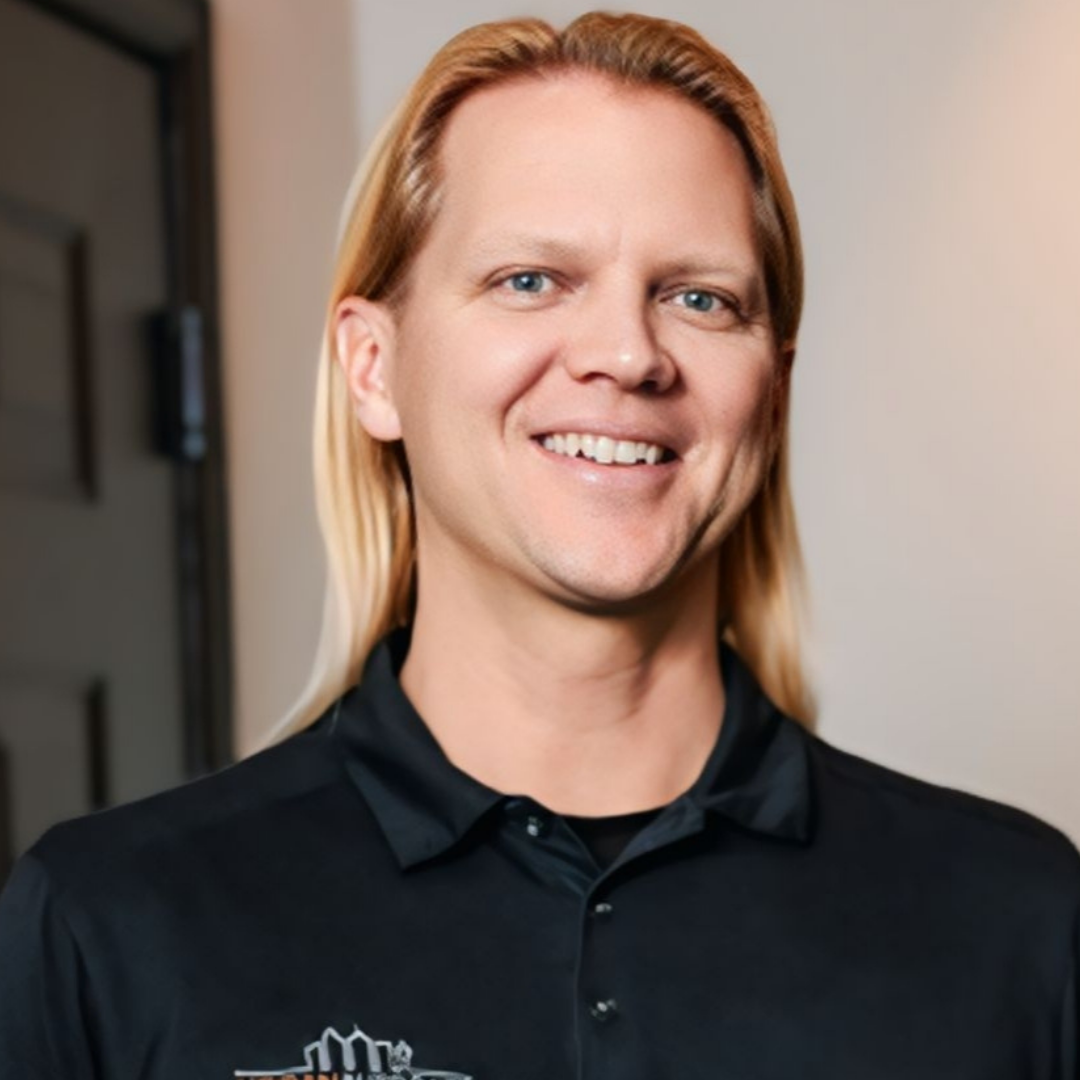
Phil Carpenter is the Director of Operations at Urban Autocare and Avalon Motorsports, overseeing seven locations in the Denver, Colorado area. He began his career as a technician and became the first employee in what was once a two-person shop, eventually helping grow the business into a 55-person operation.
His experience spans every stage of scaling an auto repair shop; from turning wrenches to leading teams, building systems, and managing multi-location complexity. That progression gives him a grounded perspective on what actually breaks, evolves, and demands attention as shops grow beyond a single location.
EPISODE SPONSOR
This episode of the Gain Traction Podcast is sponsored by Cosmo Tires. Cosmo Tires offers a wide range of tire solutions designed for durability, reliability, and performance across multiple vehicle segments. Learn more at https://www.cosmotires.com
In this episode…
Growth doesn’t fail loudly at first. It slips in through divided attention, stretched leadership, and roles that multiply faster than the team can support.
Scaling an auto repair shop introduces a different kind of pressure, one that doesn’t show up in car count or revenue reports. It shows up in managers juggling three roles, in culture that starts to drift, and in decisions that carry more weight than they did at one location. The systems that once worked stop holding, and the habits that built the business begin to limit it.
This conversation centers on what actually changes as a shop grows. The shift from technician to leader, the cost of trying to do everything at once, and the reality that profitability is what allows a business to stand behind its work when things go wrong. Scaling an auto repair shop demands sharper focus, stronger systems, and a clear understanding of where leadership attention belongs.
Here’s a glimpse of what you’ll learn:
[01:15] Background and introduction of Phil Carpenter
[02:39] Early career path and entry into the automotive industry
[04:15] Building culture through care and accountability
[07:16] Early challenges and stagnant growth in the first location
[10:57] Transition from technician to advisor and manager
[14:40] Operational strain from wearing multiple roles
[20:33] Profitability as a foundation for stability and customer care
[22:50] Leadership framework: execution, preparation, and review
[26:48] Personal background and life outside the shop
Resources mentioned in this episode:
- Phil Carpenter on LinkedIn
- Urban Autocare Website
- Avalon Motorsports Website
- Tread Partners
- Gain Traction Podcast on YouTube
- Gain Traction Podcast Website
- Mike Edge on LinkedIn
Quotable Moments:
- “I can be a very good technician and I can be a very good service advisor, but I cannot do them at the exact same time.”
- “We know how to take care of people, and we’re going to do that really, really well.”
- “We can love and care about you, but that doesn’t mean that we don’t expect you to do a really good job.”
- “If we’re not running our businesses soundly and with profit, we start squeezing pennies and stop standing behind what we do.”
- “Feedback is a gift.”
Action Steps:
- Audit current roles across your team and eliminate overlap where one person is carrying multiple critical functions. Divided attention is one of the fastest ways scaling an auto repair shop breaks down operationally.
- Define clear accountability standards for each role and enforce them consistently. Culture weakens when expectations stay informal.
- Review profitability at a granular level. Margin is what allows the business to take care of customers without hesitation when mistakes happen.
- Identify one process that worked at a single location and stress-test it across multiple locations. Systems must evolve as complexity increases.
Build a leadership habit of preparation and review. Go into key conversations with intent, then evaluate performance immediately after to improve the next decision.
Transcript
00:00
Welcome to the Gain Traction Podcast, the official podcast for tire Business. I am Mike Edge, your host and I have the privilege of interviewing the tire dealers, shop owners, counter sales reps, technicians, industry executives and other thought leaders of our industry. This episode is brought to you by Tread Partners. Tread Partners is the leading digital marketing agency that specializes in digital marketing for multi location tire and auto repair shops. Tread Partners works with clients that have hundreds of locations down to five locations. Get a professional, unbiased opinion and let Tread Partners review what you’re doing. It starts with a simple conversation. To contact tread partners, visit treadpartners.com so let’s get started. Hey folks, Mike Edge here with the Gain Traction podcast. I just want to make you aware we’ve got a great new sponsor, Cosmo Tires.
00:47
You can find out more about [email protected] they sell about every tire on the market. Here’s a short video about one of their products.
00:58
Slinging that brown mud kicker Mud kick.
01:00
Up Never getting stuck digging down deep while we cr. Welcome to the Game Traction Podcast, the official podcast for Tired Business. My guest today is Phil Carpenter, Director of operations at Urban Auto Care and Avalon Motorsports, seven locations around the Denver, Colorado area. Bill, I’m glad to have you here. Welcome to the Gain Traction podcast.
01:29
Thank you so much for having me, Mike.
01:30
Yeah, so let’s back up a little bit. I always like to let the audience know who we’re talking to. Where’d you grow up and kind of navigate your way to Urban Auto Care,.
01:43
How you got there? Yeah, yeah, absolutely. Well, I was an army for Air Force, Brad. I should say moved around quite a bit growing up anywhere from Spain and Germany to New Mexico, Virginia, California, a little bit of everything.
01:59
Nice.
02:00
Wound up in Denver here in 2003 and loved it and decided to stop the habit of moving every three years. So yeah, I think you picked a good community.
02:12
That’s a nice area. So I take it you’re a snow skier then?
02:17
I’m not actually. I do hike and camp quite a bit though.
02:20
Nice.
02:21
Yeah, I agree. Every summer we, I hike at least two 14ers they call them for those that aren’t in this area. That’s a 14,000 foot elevation mountain so it’s pretty challenging. But I definitely enjoy getting out there.
02:37
That’s awesome. So how’d you like, what was your first job like? It, I mean did you, when you moved to Denver, did you get set up? I mean did you take a job with Urban right out of the gate or did you do something else first?
02:51
Sure, yeah. When I first got to Denver, I had just graduated from Universal Technical Institute and the Audi Academy out of Phoenix. And so I joined the Audi dealership here in town, was at one of them for three and a half years as a technician, and then another year at the other one. And then I met up with Brian Sump, the owner of Avalon Motorsports, and then joined the. The Avalon team. There was no Urban at the time, so that was back to 2007. I was his first employee as the technician. It was just him and I. And several years later, we started on the. The rest of the front. But.
03:36
So how many employees total now?
03:39
We have about 55. That’s awesome. Seven. Yeah.
03:43
You come along. Y’ all come a long way.
03:46
We have, yeah. Yeah. God has definitely blessed us and the business, and we hope to pass that blessing on to the people that we have and the customers that we serve so well.
03:58
That’s all. You know, that’s cool because one of the things I like to talk about is culture, and I know that you kind of want to talk about scaling a little bit and the challenges, but culturally speaking, what do you guys do that you think sets you apart?
04:15
Oh, man, that’s a great one. I mean, there’s a lot of aspects to it, but I think it. It’s kind of the. It can be used a little bit too much, but true love and care for your team. Yeah, I think we’ve always been good at that. In the last several years, we. We have not lost that, but we have added more accountability for just performing at a high level. Like, we can love and care about you, but that doesn’t mean that we don’t expect you to do a really good job. Yeah. And. And unfortunately, sometimes it is. We love and care about you, but you’re not going to work here anymore. Yeah. Which is very difficult on both sides. But I’m blessed to have a. Maintain a relationship with a lot of former co workers. That’s awesome.
05:03
And they still come to us, and some of them are in the industry, so bring your cars in and stuff like that. So that’s.
05:09
Well, that’s a. That’s a great trait of yours. A great quality that you could still, even after kind of a tough situation, you remain friends. But, you know, it says a lot about the organization that you’re willing to let people go because it lets the people know that are in the organization that you care more for them. Like you. You know, when. When someone doesn’t fit and the people at the top can recognize that, hey, we need to remove this element for the benefit of everybody. Then everybody feels like that nest is protected in a sense.
05:41
Yeah, no, 100%. And it’s funny because, like, a lot of times we’ll be laboring over, like, hey, like, is this the right move? Like, is it really time to. To part ways with this person? And then you’re, like, concerned about how is the rest of the. The team going to react? Like, are they going to think that we’re doing the wrong thing? Are they going to be upset at us? And I don’t remember the last time where somebody was that way. They were like, thank you. What were you waiting for? So it is. It is very healthy to go through that, though. Like, I don’t ever want to get to the point where it’s. It’s callous and it’s too easy to let someone go or part ways. Like, that’s. That’s a person. That’s a personality. That’s somebody taking care of their family.
06:28
Like, you can’t ever take that lightly. And you got to make sure that you’ve given them everything and every opportunity and tools to support and love and grace and training to be able to be successful. And if they’re still not doing it, then you can go rest your head on the pillow at night and know, hey, we did what we could. Yeah.
06:50
But I do agree with you. I think it’s important to. That it should be tough all the time, because then that means you cared. That also means you probably tried everything you could to support the person on. And even if it is tough, you also know it’s for the best of the organization as a whole. And, yeah, they’re always tough, but if. If they’re too easy, then it’s probably. I don’t know, you’re getting a little callous, maybe.
07:13
Yeah, yeah, exactly. Exactly.
07:16
Well, talk about scale. Scale. Like, how’d you go? Because I think it’s really cool that you were the first employee and now you have seven stores. So walk us through that process of, you know, catching that momentum.
07:32
Yeah, absolutely. Yeah. I would say first, I don’t know, three to four years were in kind of. It was just one location. Avalon Motorsports doing German repairs and some performance work as well. A little bit stagnant. I mean, we would have a third person here or there, but not the great. Greatest location, great reputation. But no drive by traffic. We got one drive, like, client in three and a half years, and it was at, like, three years and three months in that’s funny. Location, location was not our strong suit. So Brian started attending some conferences and just really getting that fire and learning from others and in the industry and like, hey, we got some things to work on. I mean humble beginnings. Like I was writing stuff on a legal pad at our repair order. We had QuickBooks as our point of sale.
08:34
I mean this is 2007, so give us some grace on that.
08:37
Yeah, yeah, for sure.
08:39
It was just, I mean we didn’t know. I was a technician in a dealership and he had some automotive knowledge but hadn’t run a business before. And just taking the mindset of we know how to take care of people and we can do that, we’re going to do that really well. And then not losing that, but then starting to implement those just tried and true business practices throughout the years. Yeah, I would say we moved about. Let’s see. Actually I have a cheat sheet. We have a timeline up on our, we’re in our conference room, like kind of a training area that we have at locations and we put up this timeline of all the shops and when we acquired them and whatnot. But yeah, we moved the location from this tiny hole in the wall place to on Colfax.
09:33
One of the busiest streets in all of North America, frankly. It’s the longest continuous business corridor street in the lower 48. Wow. It’s like 45 miles long of businesses. It’s crazy.
09:48
That is wild.
09:49
We’ll just go straight through Denver. So we move there double in size, square footage and people.
09:57
How far was that from the old location?
10:01
Oh, sure. Yeah, great question. It was about nine miles.
10:04
Oh wow. Because that’s a, that now that’s a big move. I was just wondering if you were, you know, perceptual. I didn’t know if you like right around the corner where then make a.
10:12
No.
10:12
Yeah, you come. Wow.
10:14
Yeah, it was tough. Yeah, we lost some clients for sure. But being such a small and specialty store, like for them to find us in the first place, they probably drove aways. So we kept a lot more clients than we thought were going to. Awesome. I mean we even had, we had some people coming from as far as like Montana and like Steamboat Springs up in the mountains and stuff like that because we did some of that performance stuff and they were looking for that unique niche. But yeah, we moved into that facility and I, that was at about that time is when I started transitioning from being a technician to Advising and then eventually managing at that location.
10:57
Now, how did you find that transition? Was it difficult to let go?
11:03
Yes, very difficult in several ways. One, I’m naturally an introvert, so switching to being on the phone and problem solving with customers instead of problem solving with a car was a challenge. I would find myself, like, I get home, and, like, I felt like I was out of words and out of the capacity to listen to other people’s words.
11:31
I call that brain fry. It’s just like, yeah. You just. You can’t. There’s nothing else that could absorb that.
11:38
You could.
11:38
Yeah, yeah, I know.
11:39
I think that’s about the time when, like, I love music. I love, like, all. Growing up, I love to have, like, a nice car stereo. Like, that was a must. Like, who cares if the oil is good? Just make sure that it has a good car stereo. Right? And right about that time, I think, is when I would start to drive home with the radio off. I think we’ve all had those days. Maybe, maybe not. But were you just like, all right, I’m just driving home, windows down, and it’s quiet. So that was about the time I would start doing that. So that was a challenge. But I think what helped me overcome that was you got to find that sense of, like, what’s my purpose in this job? What’s. Of course, there’s the greater question of life.
12:25
But in that role and in that job, I always would take pride and have a sense of accomplishment when I would diagnose the vehicle that no one else could. Or it was just a very strange problem, and we get to the bottom of it. And then even just the cars that were more straightforward, like, well, that was broken, and now it’s not. There’s a. A very tangible feeling that, I don’t know, just gives you pride as you complete your day. So I had to shift that into, okay, you have that customer that they had several bad experiences, or they come in, they don’t trust you. You can tell they’re on edge. You can tell they’re on guard. And just being able to walk them through the whole repair process and get to the point of handed them their key back.
13:15
They’re spending more than they wanted to, but they feel about as good as they can about it. And they know that you took care of them and you weren’t taken advantage of. And maybe they even bring you cookies at the end. Like, that’s. That’s the. The thing that I would shoot for. It’s just like, I’m. I will be Patient with you while you are not trusting me at all and I have not done anything to you, but I’m not going to take it personally. Yeah. I’m just going to show you that I’m here to take care of you.
13:45
That’s awesome. Well, and that’s a cool way of describing your, you know, the process you had to take to get there. But I like your question to yourself of what’s my purpose, you know, and what am I doing? Well it, like you said, it is, it’s easy when you’re on the technician side. Problem solving. Boom, it’s fixed. So there it is. Did it? Yeah. Next move. Move on. Whereas the human relation is just definitely more emotional.
14:14
Oh a hundred percent. Yeah. The cars don’t talk back. They do give you attitude sometimes when you’re working hard. But. But yeah, they don’t typically come in with a preconceived idea of what you’re trying to do then.
14:26
So that’s a fact. Well, that’s a pretty cool transition to me asking this question I always like to ask people. Do you got any really cool stories about work and what you’ve done?
14:41
Sure. I know, yeah. Yeah it is. As we ended up a couple years later we added our second location. It was a, a general repair shop. So I went to that location to be the general manager there and ran that for about four years overall. And the first few years there were times where I would have to fill in as a technician. And there was one particular story that really stood out to me about the. Just the difficulties of trying to have multiple roles and where is your focus and trying to, I mean any small business, you go through stages of. You have to wear multiple hats. It could be, I mean the early stages it was on the parts department, the estimator, the technician, the car wash guy, the janitor, like all of those things. Right.
15:39
And then at this stage it was okay, I’m service advising, managing and then I’m in the fill in technician. Well I’m trying to, I got this like I can answer the phone, I can talk on the phone and finish up this car. It’s got to go like I don’t have time. Right. And so distracted. Of course not at your best and you’re not giving it your full attention. Get this car all back together. I’m take pride in my qc. I’m going to test drive it multiple times. Especially knowing this customer is about to go on a long road trip and like, all right, I got to make sure I’m giving an extra test drive. Sure enough, get all, get through everything. It leaves. It’s probably about an hour and a half later I get a phone call from the customer.
16:29
She made it about 50 miles. And then the lower radiator hose blows off. I’m like, oh boy. And mind you, she’s headed to the middle of nowhere in New Mexico to be in the wedding. She’s not getting married, but she’s in the wedding party.
16:47
Gosh.
16:48
And then she’s going to travel from there all the way to California and she’s not coming back for three months. So I’m like, worst case scenario. Add on top of that, it was it Labor Day or Memorial Day? Either way, it was a holiday weekend, three day weekend. So I’m. First thing I’m doing is like, all right, well we got to figure out how long, how bad the car is. So we ended up, we towed it to a friend of ours that has some shops, Greg Bunch from Aspen Auto Clinic. We sent car down to one of their facilities. I’m like, all right, tow it the direction she’s driving, right?
17:28
And of unfortunately they find out, well, she drove it a little bit farther than she should have after it got hot and blew the head gasket like, all right, we’re gonna learn this lesson real hard. Spend about I would guess, I mean three, maybe four hours trying to find a rental car for her. Finally found one. Got her a Lyft ride across town in Colorado Springs to this rental car. Got her a one way rental. She ended up, she made it to the wedding. We towed the car back to our shop and Denver, got it fixed, sent, finally got it fixed, sent it on a transport and shipped her the car in California.
18:14
Oh my gosh.
18:16
Like you talk about like a silly little thing like a hose clamp. Like had it been in town, cool. Come back, you’ve got to warm it over with the customer. Tighten up the clamp. Here’s some coolant. Sorry about that. We’ll take care of you on the next oil service. And just blows it completely out of proportion to like, I don’t know, it’s probably seven or ten grand or something by that whole time. It was, by the time it was said and done. But we had to do what we had to do, right? Like you got to take care of the client. And she ended up sending us countless other customers. She would come back to her, us herself and she’s like, yeah, it sucked that it happened. But like who does that. To take care of somebody to that level. Right.
19:05
We could have argued it. We could have said, well, fix your. Yeah, but can’t help you with the rental. Like, there’s a lot of ways to argue it, but this will. This does segue briefly into something. So don’t let me forget that. But the lesson that I got from that was just like, okay, I can. I can be a very good technician, and I can be a very good service advisor, but I cannot do them at the exact same time. And frankly, it’s even hard to do it where you’re, okay, I’m technician. All right, Now I’m going to stop and then go answer the phone. That is also very difficult. So finally, we. We were able to. To grow into a size where I didn’t have to fill in. In roles like that. So.
19:52
Well, there’s a lot to be said. You know, I don’t know where I read this, saw it. Maybe it was on a YouTube reel or something. But, you know, men. Men are designed. Men. Men are very good at getting tasks done, but they. We. We are designed to do one thing at a time. And. And we’re very. And we’re very good at that. It’s like. But we can knock out tasks quick if we’re focused. And. And then I’m. I’m the same way. If I get distracted, I’m on a task, dude. It’s like everything gets unraveled. I mean, you know, and I have to be able to say, no, I’m not trying to be, you know, a jerk or whatever, but I. I got to get this done first, you know?
20:30
Yeah, yeah. I was gonna say, I think one thing that I have noticed in my. I don’t know, however many years I’ve been In this industry, 20 something, is I feel like there’s a lot of times where our industry can get a bad rap for maybe a situation like that, Right. If were not running our company as a profitable company, I may not have the choice. Right. It might be a choice between taking care of that customer the right way and paying my technician or paying the electric bill or, like, whatever it is. Right? So I think there’s a lot of times our industry does get themselves in a bad position, because if we’re not running our businesses soundly and running it with profit, then we start squeezing pennies, and then we start to not stand behind what we do. Right?
21:26
And then it puts the customer in a bad situation, and they may not understand that, and frankly, it’s not their job. Or responsibility. It’s ours to make sure that we run profitably so that we can take care of things when we mess it up and also get back to the community. And B, do charitable things. Don’t run your business as a charity, but be profitable and then be charitable.
21:53
Well, no, I, I, I’m with you. It’s, it’s a kind of, it’s creating stability. Right. And if you can create an environment of stability within your building, and that includes the books financially, then you’re able to do things for people that are in trouble and you can make sound decisions without panic because you don’t, you know. Yeah. Did you want to make those, you didn’t want to give that away, but you knew it was the right thing to do. You, you know, from, from being the tech on the job, you knew, didn’t put the clamp on, whatever.
22:26
Yeah.
22:26
And then that’s like, oh, well, it’s on us. So. But being able to do that, look at what she’s done for you guys. The, although, you know, what you get out of that is phenomenal, but it’s a, it’s awesome that she recognized that you guys had gone out of your way. I love that too.
22:43
Yeah, absolutely. Yeah.
22:45
So once in a while you run into those good customers too, right?
22:48
Yeah, for sure.
22:50
So on a personal level, do you have a quote, a code, something that you kind of live by?
23:00
I tend to kind of rotate something that I’m. A quote or just like a general focus. Every, I mean, I wouldn’t say an exact timeline, but every, roughly every quarter or something that I’m really trying to pour myself into. And this one is more of a concept, but basically that great leaders are great. Excuse me, Good leaders or good employees know how to execute. They know how to do whatever they need to do. Well, a great leader adds to that like very poignant and well thought out preparedness. Just preparation before you go into, you name it, whether it’s a meeting or a difficult conversation or a phone call, it doesn’t matter. And then an elite leader to really get to that next level and to continue to hone yourself is now I’m going to go back and review it.
23:58
And that could be an internal exercise that you’re just mentally going through your reps of like playing through the day or a conversation. How did they, how did that go? What went well? What didn’t go so well? And what can I learn from it? And then other times you got to make sure that like there’s Other people involved solicit that feedback to get that. That review from another perspective. Because we can all play through different things in our head and we think we communicated something and we didn’t. So I’ve just been really focusing on that, just really in the last couple of weeks, since the beginning of the year. And I. I do some of it pretty well, but being consistent in that and really taking it to the next level because the.
24:46
The feedback portion, especially as you’re in a more senior position, people are less likely to give you candid feedback.
24:57
That’s a good point.
24:58
I preach it from the mountaintops. Like, feedback is a gift. Yeah, please give it to me. And no matter how many times you say it, people are like, yeah, but didn’t really mean that until. Until they finally do. And then you. The way you respond to that is vital. Vital, vital. You can’t take it personally. You got to take it as like, thank you for telling me. Like, I, you’re not wrong. Like, I. I didn’t mean that. This is what I meant, but I. You just got to receive it welcomingly. Like, literally, like they just handed you a present and thank you because they care about you enough to tell you the thing that you need to hear so that you can get better. And that Kaizen mentality of just getting slowly getting better over time.
25:45
Yeah. And that method of Kazan is just constant. Where can I improve? You know, And I, I’m totally agree with you. You know, we. I, I don’t know that everybody does, but I have. I have friends that’ll, you know, put me in check. You know, when they. They see something they didn’t like or whatever they say, you know, that ain’t you know, whatever. And right then you’re always like, yeah, you know, you’re right things, you know, but at first, you know, it does sting. It’s like a. But I think it’s important, like, I know you’re right about the whole thing with regards to, you know, however senior you are or superior in the regards of, like, the structure of an organization. People don’t necessarily trust that there’s this open communication.
26:28
And I can go tell him, hey, I don’t like the way you’re doing that or the way you treated that customer or whatever. And. But once they do know that, I think that’s a healthy. Definitely a healthy. Well, look, communication is healthy. Any kind of communication is healthy. And the more we communicate, I think the better off we understand each other.
26:46
Yeah. 100%.
26:47
Yeah. So what’s a Hobby. I know you do like to hike, but what else do you like to do?
26:51
Yeah, I, I hike. I play indoor soccer and I play basketball. Those are kind of my main ones. And then slowly teaching. Two of my sons are getting into the Automotive World at 20 years old and 17 old. So definitely spend some time with them on their cars and that kind of thing.
27:13
Awesome.
27:14
Of course, spending time with my wife and we have, we have five kids total, so we got three younger ones. They’re. They’re hobby, too.
27:22
Yeah, they are. But, you know, you’re in a prime time spot too. I don’t know how mine are just past that point, and I have five as well, so. And I remember hearing people say this all the time. Enjoy it because it goes quick. It goes too, way too quick. And now like, our nest is busted, everybody. You got one singer in high school left and that’s it. And it’s like, yeah, where did that, where did that go? You know, it was like we were all together. Everybody was nice, you know, and my mom used to say this all the time. It’s. It’s a lot easier. You don’t feel like it when they’re young because there’s so much work you feel like. But it’s a lot nicer when they’re at home and, you know, they’re tucked in bed and, you know, they’re not.
28:03
It’s like before they start driving, because once the driving starts, but then once one of them leaves the nest, then you know, just you know, the worldview of things, like you worry about them, you know, you just worry safety all the time, you know, but, yeah, it’s just part of my mom.
28:19
My mom says having kids is like having. Allowing your heart to walk around outside of your body.
28:26
Ooh, that’s good.
28:28
That’s nice. That’s good. Because like you said, when they’re close, it still can be painful at times, but you can keep them close. And then as they grow and they still go out into the world and start making their own choices and their own mistakes, they can get hurt and. But you’re going to be there to pick them up and get them back on their feet.
28:47
So that’s well said from your mama. She’s got some good wisdom there. I like that one.
28:52
Yeah.
28:52
Well, I can’t thank you enough for being part of the podcast, Phil. It’s been a pleasure.
28:56
Thank you. That was an honor to be on here. Yeah, I love it.
28:59
Good to get to know you and we’ll have you guys back on sometime in the future.
29:04
That sounds great. I’d love to.
29:06
All right. To all our listeners out there, thank you. You know, we love you. Come back and see us here at the Gain Traction Podcast. Hey folks, Mike Edge here with the Gain Traction Podcast. Real quick, we get a lot of people ask us, they know Gain Traction, but who. Who’s Tread Partners? Well, Tread Partners is our parent company and they’re a marketing agency dedicated strictly to tire and automotive repair shops. Anywhere from five locations all the way up to hundreds of locations in primarily one field that is always a pain for most people is paid search or PPC or Google Ads. We see enormous amount of waste in it and we see inefficient spend in it. If you want to know if you’re doing well or not, give us a call. We’ll help you. We’ll audit your account.
29:48
We’ll look under the hood and tell you if you’re doing things the right way or the wrong way and help you optimize that spend. You can reach me and I’ll direct you in the right [email protected] or feel free to go to treadpartners.com the website. To all our listeners, thank you for being part of the Gain Traction Podcast. We are grateful for you. If you’d like to find more podcasts like this, please visit gaintraction podcast.com if you’d like to make a guest recommendation, please email [email protected] this episode has been powered by Tread Partners, the leader in digital marketing for multi location tire and auto repair shops. To learn more about tread partners, visit treadpartners.com.
Sign up for the newsletter!
Get notified about updates and be the first to get early access to new episodes.
Sign up for the newsletter!
Get notified about updates and be the first to get early access to new episodes.